
Sintered Stone vs Quartz: A Malaysian Kitchen Top Guide
Sintered stone vs quartz for Malaysian kitchens: how each handles wok heat, sun, stains and chips, plus edges, cost drivers and where to use them.
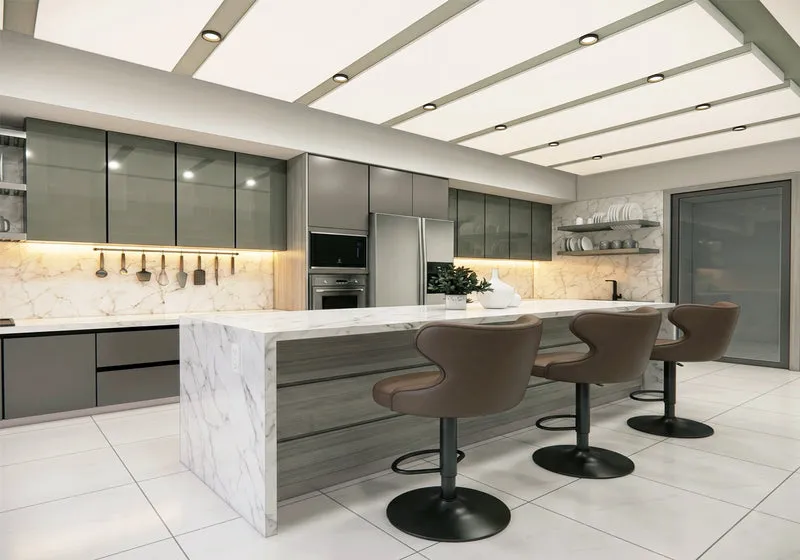
Many customers planning a new kitchen with us arrive having narrowed the countertop down to two options: sintered stone vs quartz. Both are dense, non-porous, easy to clean and available in convincing marble looks. But they are made very differently, and it shows exactly where a Malaysian kitchen is toughest on a surface: a wok lifted off a high flame, afternoon sun through the back door, a heavy pot knocked against an edge. We build kitchens with both, so here is our honest comparison.
What is sintered stone, and what is quartz?
Sintered stone: minerals fired like porcelain
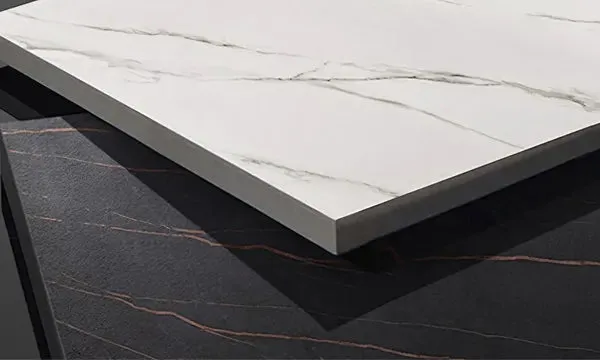
If you are wondering what is sintered stone, think of it as porcelain taken to an extreme. Finely ground natural minerals such as clay, feldspar and silica are pressed under enormous pressure, then fired in a kiln, typically at 1,200 °C or more, until they fuse into a dense, glassy slab with no resin binder. It is also sold as Tech Stone or rock slab. On most slabs, the marble or concrete pattern is printed digitally onto the surface before firing.
Engineered quartz: crushed stone bound with resin
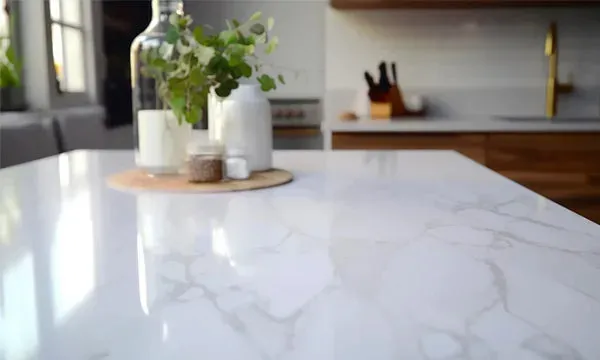
Engineered quartz, usually just called quartz or quartz stone, is a different recipe. Typically around 90% crushed natural quartz is mixed with roughly 7–10% polymer resin and pigments, compacted under vacuum and vibration, then cured at far lower temperatures than a kiln. The resin holds it all together, and it is the reason quartz reacts differently to heat and sunlight. A quartz countertop comes in a very wide range of colours. It is not the same as natural quartzite, which is quarried.
Sintered stone vs quartz: heat, scratches, stains and sun
Heat: wok cooking and hot pots
Heat is the clearest win for sintered stone. With no resin to soften, a hot wok or claypot set down on it will not scorch the surface. Quartz resin can scorch, yellow or crack when a pan comes straight off the burner, so quartz brands recommend trivets, and heat damage is typically excluded from warranty. Even on sintered stone, put a trivet under anything that stays hot for long, such as a portable steamboat stove: sustained heat and sudden temperature changes stress any stone.
Scratches, stains and chemicals
Both are non-porous, so curry, turmeric and oil sit on the surface instead of soaking in, and neither needs sealing. Sintered stone is generally more scratch-resistant; grey metal marks from pot bases can show on matte finishes but clean off. Quartz resists everyday scratches well, though dark polished colours may gather fine marks over time. The bigger gap is chemicals: oven cleaner, bleach and solvents can damage quartz resin, while sintered stone is largely unaffected.
Chips and impact
Here quartz has the advantage. Sintered stone is extremely hard but brittle: it does not flex before it breaks, so a sharp knock from a heavy pot on an edge or corner can chip it, and a chip is hard to repair invisibly. The resin in quartz gives its edges a little more resilience, and a small chip can usually be filled with colour-matched resin.
Sun, humidity and hygiene
Sintered stone is UV-stable and used on building façades and outdoor kitchens, so it holds its colour in a yard kitchen or beside a west-facing window. Quartz resin can yellow under prolonged direct sun, and standard quartz warranties commonly exclude outdoor use. Humidity troubles neither, since water and mould cannot get into a non-porous surface. The weak points in our climate are the silicone joints and the cabinet below, which is why our sink cabinets use a moisture-resistant plywood carcass.
Thickness, edges and the printed-pattern catch
Sintered stone countertops are usually 12 mm thick (20 mm slabs are also made), with a thicker-looking front edge created by mitring a strip underneath. Quartz is commonly around 20 mm, with 30 mm available, so a chunky edge is often just the slab itself.
Then there is the detail most buyers only discover later. On most sintered stone the pattern is printed on the surface only, over a plain body of a single base colour. That matters in three places:
- Mitred edges and waterfalls: where two pieces meet at 45°, the joint can show a line of body colour and the veining may not flow round the corner.
- Chips: a chip exposes the plain body, so it stands out more.
- Shaped edges: bullnose or ogee profiles cut through the print, so keep printed slabs to a square edge with a small chamfer.
The fix is through-body sintered stone, with colour, and on some ranges veining, running right through the slab. It costs more and usually comes in fewer patterns, but it is worth asking for on a waterfall island. Quartz is coloured through by nature, so a chip shows the same base colour, though bold veins may not wrap perfectly at a mitre.
Fabrication, installation and what drives the price
Sintered stone is more demanding to fabricate. It needs diamond tools and water-cooled cuts, slabs travel on edge because they cannot flex, and every hob and sink cut-out needs rounded corners and a safe margin from the edge (Neolith, for example, specifies at least 5 cm). Quartz is more forgiving to cut, more fabricators handle it, and a small installation mishap is easier to put right.
One health note: cutting stone that contains crystalline silica releases dust that is hazardous to the workers breathing it, and engineered quartz typically contains much more crystalline silica than sintered stone. Australia banned engineered stone benchtops, slabs and panels from 1 July 2024 for this reason, while resin-free sintered stone and porcelain fall outside the ban. The risk lies in fabrication, not in an installed top at home.
When it comes to sintered stone vs quartz price, we will not quote figures, because a fair price depends on your drawing. Entry-level quartz usually costs less than entry-level sintered stone, but premium quartz overlaps, and these factors often matter more:
- Brand, thickness and body: well-known European brands, thicker slabs and through-body colour all cost more.
- Slab count: an island or full-height backsplash may need an extra slab, especially if veins must match.
- Edge and cut-out work: mitred edges, waterfall sides, undermount sinks and hob cut-outs all add time.
- Access: a long one-piece top needs a clear route through doors, stairs or the lift.
Wet kitchen, dry kitchen or island: which top goes where
Many Malaysian homes split cooking between a wet kitchen for frying, wok work and washing, and a dry kitchen for light prep and guests. Mixing materials between the two is perfectly normal, and our kitchen cabinet design guide explains how to plan both zones.
- Wet kitchen: sintered stone copes best with high heat, sun from the back door and strong degreasers. On a tighter budget, compact laminate resists water and stains at lower cost, but like quartz it needs a trivet under a hot wok. Quartz works if you are strict with trivets.
- Dry kitchen: either stone suits. Quartz offers the widest colour choice; sintered stone excels at large-format marble and concrete looks.
- Island: pick through-body sintered stone or quartz for waterfall sides, with a rounded corner where people pass; our kitchen island guide covers sizing.
| If your priority is | Lean towards | Why |
|---|---|---|
| Daily wok cooking and hot pots | Sintered stone | No resin to scorch |
| A yard kitchen or strong sun | Sintered stone | UV-stable; quartz resin can yellow |
| Edges that survive knocks | Quartz | Resin adds resilience; chips are easier to fill |
| A waterfall or mitred island | Through-body sintered stone or quartz | Colour matches at joints and chips |
| The widest colour choice | Quartz | Huge range of solid and veined colours |
| Lowest cost in a wet kitchen | Compact laminate | Water- and stain-resistant; trivet for hot woks |
Sintered stone beyond the kitchen
The same strengths make sintered stone popular in Malaysian homes well beyond the kitchen countertop. A sintered stone dining table shrugs off hot dishes, spilled curry and sambal, and keeps a marble look without the sealing and etching worries of real marble. It works just as well on coffee tables and TV cabinet tops. Browse our dining tables in wood, marble and sintered stone.
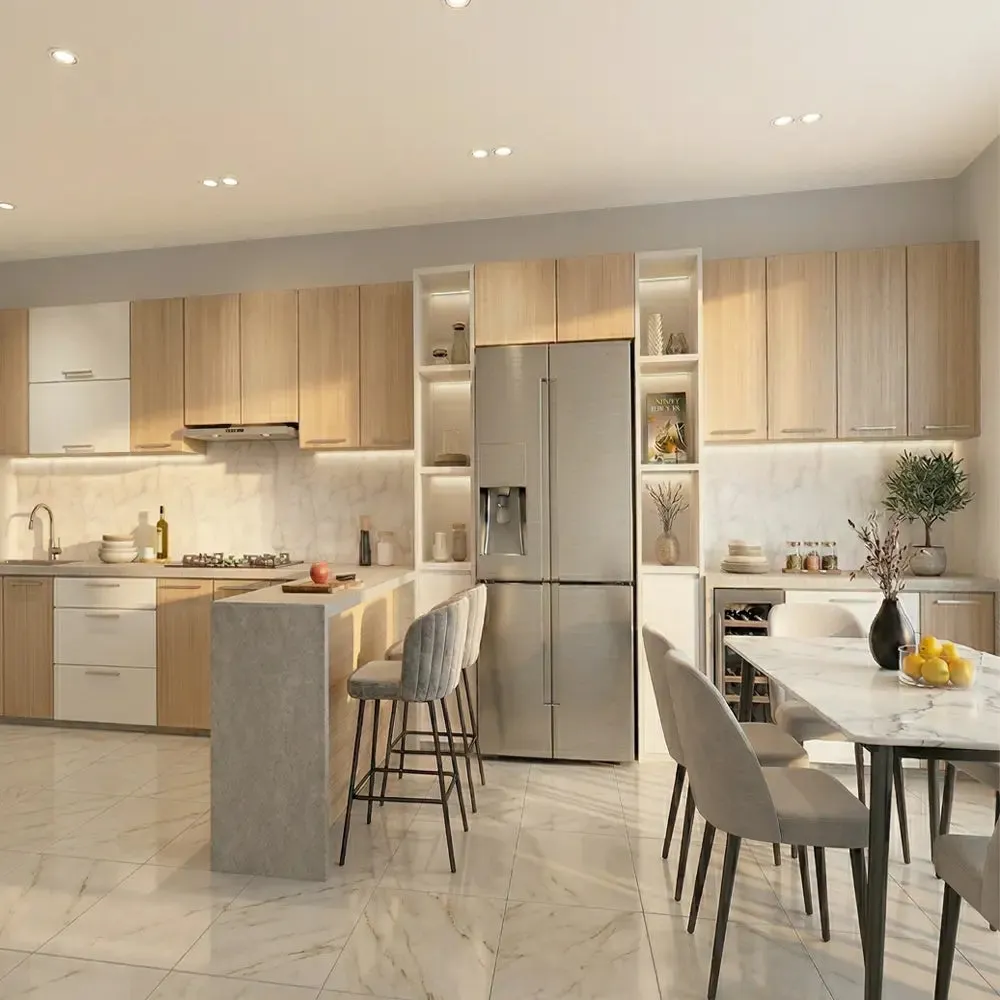
Two cautions carry over: sintered stone is heavy, so a table needs a properly engineered base, and a softened edge is kinder to both the table and the people around it. Our dining table buying guide compares sintered stone with wood and marble tops in more detail.
Care, cleaning and common mistakes
Daily care is the same for both: warm water, a little dishwashing liquid and a soft cloth, then wipe dry. On quartz, avoid oven cleaner, bleach, thinners and scouring pads. Lift metal marks on matte sintered stone with a non-abrasive cream cleaner, and always use a chopping board: sintered stone will blunt your knives long before they mark it.
- Choosing from a small sample: pattern scale and repetition only show on a full slab.
- Ignoring the edge: ask whether a sintered slab is printed or through-body before designing mitres.
- Sharp island corners: a small radius resists chipping far better than a crisp 90° corner.
- Standard quartz in the sun: a yard kitchen or a top under a skylight is a sintered stone job.
To see sintered stone and quartz in person, visit one of our showrooms in Perak or Penang.
Frequently asked questions
Is sintered stone better than quartz for a Malaysian kitchen?
For heavy wok cooking, sun and harsh cleaners, yes, because it contains no resin. Quartz is more forgiving at the edges, offers more colours and usually costs less. A sensible split is sintered stone in the wet kitchen and either material in the dry kitchen.
Can I put a hot wok straight onto the countertop?
On sintered stone, a hot wok set down briefly will not scorch it. On quartz, always use a trivet: heat can permanently mark or crack the resin, and that is typically not covered by warranty.
Does sintered stone chip easily?
The flat surface is very tough, but edges and corners can chip if hit hard by something heavy. A slightly rounded or chamfered edge makes chips less likely, and through-body slabs make them less visible.
Why does sintered stone usually cost more than quartz?
It is fired at very high temperatures and is more demanding to cut and install. Brand, thickness and through-body colour add to the price, so premium quartz and entry-level sintered stone can end up close.
