
How to Choose a Dining Table in Malaysia: Buying Guide
How to choose the right dining table in Malaysia: sizing and clearance rules, shapes, and humidity-proof tops in wood, marble and sintered stone.
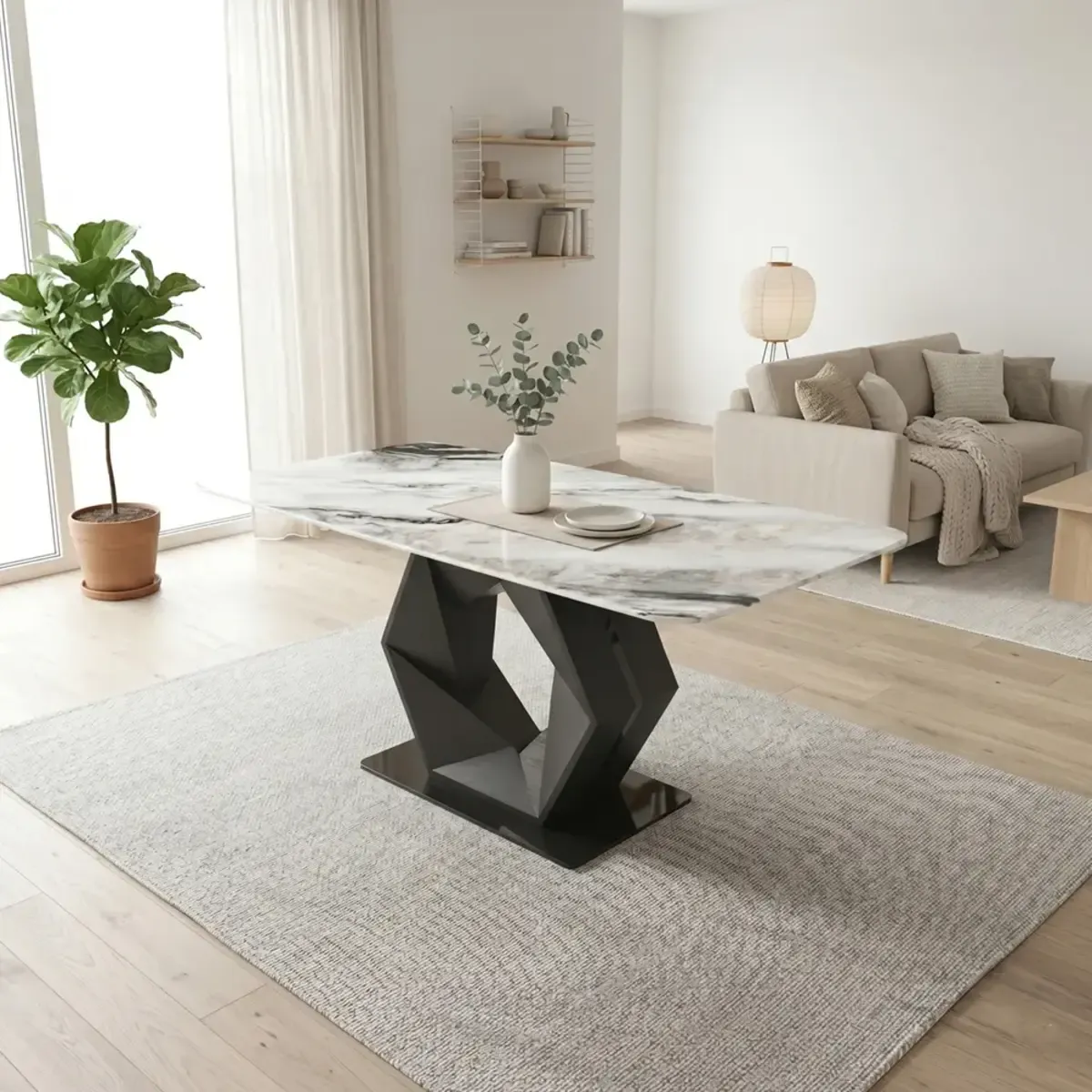
The dining table is where your family actually gathers — breakfast before work, homework after school, reunion dinners and everything in between — so it is worth getting right. Buy a dining table that is too big and the room feels cramped; too small and it never seats the guests you host. Choosing the right dining table in Malaysia also means thinking about our humid, tropical climate, where the wrong tabletop swells, stains or warps within a couple of years. As a Malaysian factory that builds dining tables and matching sets for local homes, here is a practical, step-by-step buying guide.
Start with your room, not the table
The most common mistake is falling for a table in the showroom before measuring the room it has to live in. A dining table needs empty space around it far more than most people expect — room to pull chairs out, sit down and walk behind a seated person. Measure your dining area first, then work backwards to the largest tabletop that still leaves comfortable clearance on every side.
- Leave at least 90 cm (36 inches) of clearance between every used edge of the table and the nearest wall, cabinet or doorway. This is the non-negotiable minimum — it lets a seated person pull their chair back and someone else squeeze past behind them.
- 100–120 cm is more comfortable where you have the space, especially on the side facing a doorway or the main walkway into the kitchen.
- Allow about 60 cm (24 inches) of table edge per person. That is the width one place setting and one chair need without elbows clashing; 65–70 cm feels generous for longer reunion meals.
- Account for the chairs, not just the tabletop. A 180 cm table with chairs pulled out can occupy well over 3 m of floor once you add the clearance — sketch the full footprint before you commit.
How many people should a dining table seat?
Once you know how much floor you have, match it to the seating you actually need day to day — then decide whether you want extra capacity for guests and festive dinners. Use these lengths as a starting point for a rectangular table before adjusting for your room.
- 4 seats: around 120 cm long × 75–90 cm wide. Ideal for a couple, a small family or an apartment.
- 6 seats: around 150–180 cm long × 90 cm wide — the most popular size for a Malaysian family home.
- 8 seats: around 200–240 cm long × 90–100 cm wide, for larger families or those who host often.
- 10–12 seats: 270 cm or longer — usually reserved for a dedicated dining hall or a large landed home.
- Round tables seat differently: about 90–100 cm diameter for 4, 120–135 cm for 6, and 150 cm for 8. A round top has no head of the table, so everyone can see and talk to everyone.
If your everyday number is small but you host big reunion dinners, an extendable dining table with a butterfly or add-in leaf is the smart compromise — compact for daily use, extra seats when the whole family visits.
Rectangular, round, square or extendable?
Shape is not only about looks — it decides how the table fits your room and how people interact around it. Match the shape to your floor plan rather than the other way around.
- Rectangular — the default for good reason: it seats the most people in the least awkward way and sits neatly against a wall or in a long dining area. Best for narrow or long rooms and for families of six or more.
- Round — sociable and safe (no sharp corners for young children), and it eases traffic flow in a tight or square room. A round dining table works beautifully for 4–6, but grows impractical much beyond 150 cm because the centre becomes hard to reach.
- Square — a good match for a compact, square dining area and intimate seating of four. Two squares can also be pushed together when you need more length.
- Extendable — the flexible all-rounder for homes that are small most days but full during festivals. Look for a smooth, well-engineered mechanism and a leaf that stores easily.
Tabletop materials for Malaysia's climate
This is where our tropical climate matters most. High year-round humidity and the occasional spilled curry are hard on a dining surface, so the tabletop material affects durability far more than the base or legs. Here is how the main options compare for a Malaysian home.
Solid and engineered wood
Solid wood is warm, timeless and repairable — scratches can be sanded and re-oiled. Its one weakness is our humidity: real wood expands and contracts with moisture, so a quality seal and stable, well-dried timber matter. Engineered wood with a tough laminate or veneer top is more dimensionally stable and easier to wipe clean, making it a practical, value choice for a busy family.
Marble
A marble dining table is unmistakably luxurious, cool to the touch and heavy, with veining that is unique to each slab. But natural marble is porous: it can stain from coffee, red wine, soy sauce or lemon, and etch from acidic foods unless it is sealed regularly. If you love the look and are happy to use coasters and re-seal it, marble rewards you with genuine natural beauty. Browse our marble and stone-top dining sets to see the difference in person.
Sintered stone
A sintered stone dining table is engineered from natural minerals fired under extreme heat and pressure into a dense, non-porous slab — and it is arguably the best all-round top for a Malaysian dining room. It resists scratches, heat and stains: you can set down a hot pot, and spilled wine or oil simply wipes off because nothing soaks in. It needs no sealing and can be made in a marble look without marble's upkeep. The trade-offs are a harder, cooler feel and, like all stone, a heavy top that needs a sturdy base.
In our climate, the tabletop is where a dining table lives or dies. A stunning top that stains in the first month or swells after two rainy seasons is a false economy — choose the surface for how your family actually eats. — TD Furniture
Choosing dining chairs and buying as a set
Chairs make or break the daily experience — you sit in them far longer than you look at the table. Get the proportions right and coordinate the look, whether you buy a matched dining set or pair a table with separate dining chairs.
- Mind the seat-to-table gap. Aim for roughly 28–30 cm between the chair seat and the underside of the tabletop so thighs clear comfortably. Standard tables are about 75 cm tall and standard seats about 45–47 cm.
- Check the apron and legs. Make sure chairs actually slide under the table and that leg positions do not clash with the table's base — a common problem with pedestal and trestle bases.
- Match materials to your life. Upholstered chairs are comfortable but need wipe-clean or removable covers with young kids; wood, rattan-look or moulded seats shrug off spills more easily.
- Buy the set, or coordinate deliberately. A ready-made set guarantees the chairs suit the table; mixing your own lets you personalise, but keep one common thread — a shared timber tone, metal finish or colour — so it reads as intentional.
For extra storage and a finished look, many families pair the table with a matching sideboard from our console tables and sideboards range — handy for crockery, table linen and serving dishes.
Why buy your dining table factory-direct
As a Malaysian furniture maker since 2002, with a 200,000 sq ft factory in Lahat, Perak, TD Furniture builds dining tables and sets and sells them factory-direct — so you pay factory pricing rather than layers of retail markup, and every piece passes end-to-end quality control. It also means real flexibility: you can customise the size to fit your exact dining area, choose the tabletop material for your climate and lifestyle, and coordinate chairs and a sideboard to match. Come see and feel the finishes at any of our showrooms across Perak and Penang before you decide.
Frequently asked questions
What size dining table seats six people?
A rectangular table roughly 150–180 cm long by 90 cm wide comfortably seats six, allowing about 60 cm of edge per person. A round table for six needs about 120–135 cm in diameter. Whichever you choose, keep at least 90 cm of clearance around the table so chairs pull out freely.
Is sintered stone or marble better for a dining table in Malaysia?
For most Malaysian families, sintered stone is the more practical choice: it is non-porous, so it resists heat, scratches and stains from spills, and it needs no sealing in our humid climate. Marble is more beautiful as a natural material but is porous and can stain or etch, so it needs coasters and periodic re-sealing. Choose marble for the look, sintered stone for low-maintenance daily use.
Round or rectangular dining table for a small home?
In a tight or square room, a round table often works better — it has no sharp corners, eases traffic flow and seats people sociably. In a narrow or long room, a rectangular table against the wall is the more space-efficient choice. If your daily needs are small but you host often, an extendable table gives you both.
