
Office Chair Malaysia: A Practical Buying Guide
How to choose an office chair in Malaysia: mesh vs leather in our humidity, the adjustments worth paying for, and honest RM price bands.
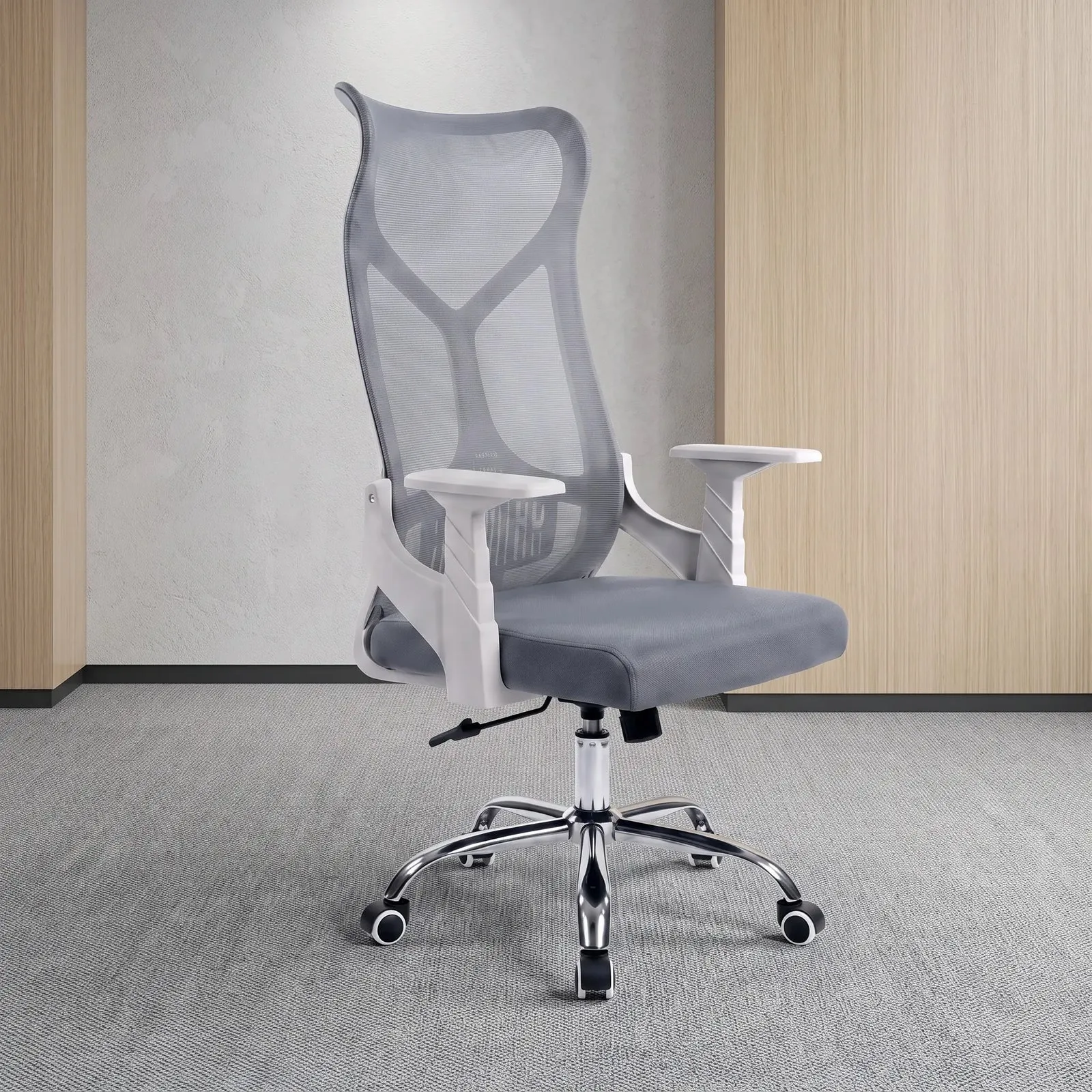
Most people spend more hours in a desk chair than in any other piece of furniture they own, and still choose it in about four minutes — usually on price. Buying an office chair in Malaysia adds a wrinkle the overseas reviews never mention: our climate. Humidity that sits around 80% for most of the year, and a home office that is often cooled by a ceiling fan rather than a compressor change which materials survive, which ones peel, and which ones you actually want your back against at 3pm. This guide covers what matters in that order — material for the climate, the adjustments worth paying for, how to size a chair to your desk, honest RM price bands, and the two-minute build check that separates a chair that lasts five years from one that sags by Raya. It is the same walkthrough we give customers browsing our office chair range in the showroom.
Start with hours, not features
Before comparing anything, count the hours. The honest question is not "which chair is best" but "how long do I sit in it in one stretch?" — because that number decides how much adjustment you actually need, and it is the single best predictor of whether you will regret a cheap chair.
- Under 2 hours a day — a homework chair, a chair for paying bills, a spare seat in a study corner. A simple mid-back chair with gas-lift height adjustment is genuinely enough. Spending more buys features you will never touch.
- 3–5 hours a day — students, part-time work-from-home, evening admin. This is where lumbar support and a reclining backrest start to earn their keep, because your posture drifts once you stop paying attention to it.
- 6–9 hours a day — full-time WFH or an office desk. Buy the adjustments: seat height, seat depth, adjustable lumbar, tilt with a lock, and armrests you can raise and lower. At this level a chair is equipment, not furniture.
- Shared or hot-desked — if two people use the same chair, prioritise fast, tool-free adjustment over a plush fixed shape. What suits a 1.55 m user is punishing for a 1.80 m one.
Mesh vs leather vs fabric: what the Malaysian climate decides
The mesh vs leather office chair debate is settled differently here than it is in a temperate country. Heat and humidity attack upholstery chemically, not just cosmetically, and they decide how a chair feels after an hour rather than in the first ten seconds of a showroom sit-test.
Mesh — the default for a Malaysian home office
A tensioned mesh back lets air move straight through the panel, so body heat and perspiration are not trapped against your shirt. In a room cooled by a fan rather than air-conditioning, that difference is not subtle — it is the reason a mesh chair still feels neutral at the end of a long afternoon while a padded back feels damp. Mesh also has nothing to peel, which matters a great deal in our humidity. What you are paying for in a good mesh chair is tension: the weave should spring back firmly under hand pressure and be clamped into a rigid frame, not loosely stapled. Cheap mesh stretches out, loses its shape and starts to sag in the lumbar zone where you need it most. Our grey-mesh Kira task chair is a straightforward example of this format — mesh back, padded seat, five-star castor base — and it is the shape we recommend most often for a home desk.
PU leather — the executive look, with a caveat
PU (polyurethane) leather is what gives a high-back executive chair its formal presence, and it has real advantages: it wipes clean in seconds, it does not absorb spills, and it photographs beautifully behind a director's desk. The caveat is hydrolysis — the polymer coating on PU breaks down faster in sustained heat and moisture, which is why budget PU chairs in tropical conditions can start flaking at the seat front and the armrest tops years before the frame is tired. That is not a reason to avoid PU; it is a reason to buy a thicker, better-laminated PU, keep the chair out of direct sun through a window, and expect to wipe perspiration off it rather than let it sit. If your office is properly air-conditioned all day, PU is a comfortable and sensible choice — chairs like our Sterling and the high-back Vitter are built around exactly that use case.
Fabric — the middle ground
Woven fabric breathes better than PU and feels warmer and softer than mesh, which some people prefer against the lower back. Its weakness in our climate is that it holds moisture and absorbs whatever is spilled on it, so it needs occasional proper cleaning rather than a wipe. Choose a tight, dark weave over a loose pale one, and avoid fabric entirely for a chair that will sit in an unventilated store room between uses.
The adjustments that actually matter
"Ergonomic" is an unregulated word on a product page. What makes a chair genuinely ergonomic is that it moves to fit your body, so ignore the marketing and check for these mechanisms in order of importance.
- Seat height (gas lift). Non-negotiable. A working range of roughly 42–52 cm from floor to seat covers most adults. Set it so your feet are flat and your thighs are level — if your feet dangle, the seat edge presses your thighs all day.
- Lumbar support. The backrest should push gently into the inward curve of your lower back. Adjustable lumbar (height and/or depth) is much better than a fixed bulge, because a fixed one that lands in the wrong place is worse than none at all.
- Backrest tilt with a tilt lock. Leaning back periodically offloads the spine. What you want is tension you can dial to your weight plus a lock that holds the back upright when you are typing — a chair that only free-rocks becomes tiring.
- Armrests. Height-adjustable armrests let your shoulders drop and your forearms rest level with the desktop. Fixed armrests that are too high force your shoulders up; ones that are too wide let your elbows hang. If armrests will not tuck under your desk, they are a problem, not a feature.
- Seat depth. You should be able to fit two to three fingers between the front edge of the seat and the back of your knee. Too deep and the edge cuts off circulation; too shallow and your thighs are unsupported. Sliding seat depth is a premium feature, so if it is not available, pick the right seat size to begin with.
- Headrest. Useful if you recline and think, or take long calls; irrelevant if you sit upright and type. A headrest that is fixed at the wrong height will push your head forward — only worth having if it adjusts.
Half the discomfort people blame on their chair is really a chair set up wrong — seat too high, armrests too tall, lumbar in the wrong place. Spend ten minutes adjusting a new chair before you decide it does not suit you. — TD Furniture
Chair types, and who each one suits
Showrooms label chairs inconsistently, but almost everything on the floor is one of five shapes. Pick the shape first — it narrows the field faster than any spec list.
- Mesh task chair. Mid-height mesh back, compact footprint, full adjustment. The best all-round choice for a home office chair in a condo or SOHO corner, and the format we point most Malaysian buyers towards.
- Mid-back chair. Padded back that supports up to the shoulder blades. Compact, affordable and easy to tuck fully under a desk — ideal for a study nook or a second workstation.
- High-back executive chair. Tall backrest plus headrest, usually PU leather, often with a thicker seat cushion and a weightier tilt mechanism. Buy it for a manager's room, a director's desk or a formal home study.
- Visitor / conference chair. Fixed frame, no castors, no gas lift — designed for stacking or lining up at a meeting table. Cheap for a reason and perfectly correct for its job; just never buy one as a daily working chair.
- Gaming chair. A bucket-style racing seat with side bolsters, a deep recline and usually PU upholstery. It looks dramatic and reclines further than a task chair, but the bolsters that hug you in a game restrict how you shift position over an eight-hour work day, and PU plus a warm bedroom is the toughest combination for our climate. Great for gaming; a mesh task chair is usually the better daily desk chair.
Sizing the chair to your desk
A chair is half of a system. Most Malaysian desks are built to a fixed height of around 72–76 cm, which is why a seat range of about 42–52 cm exists — it is designed to land your elbows level with that top. Measure before you buy, not after.
- Check knee clearance. You need roughly 65 cm or more from the floor to the underside of the desk apron. A thick drawer box or a deep apron is what stops a chair from pulling in close — a very common problem with older office tables.
- Measure armrest-to-apron. Put a tape on the height of the armrests at their lowest setting. If they are taller than the underside of the desk, the chair will never tuck in and you will work at arm's length from your screen.
- Allow clearance behind. Leave about 70–90 cm behind the desk so the chair can roll back and someone can walk past — the measurement everyone forgets in a narrow condo study.
- Fix a mismatch from the bottom up. If the desk is too high for you, raise the seat and add a footrest rather than hunching. If you are shopping for both, our study table buying guide explains desk height and depth in detail, and the study table range pairs neatly with a compact task chair.
- For a multi-person office, plan the chair and the desk together — our office workstations set the desk height and partition spacing, and the chair simply has to fit within that bay.
Office chair price in Malaysia: what the money buys
Office chair prices in Malaysia span an enormous range, and the honest news is that the useful gains are concentrated at the bottom of it. Going from RM150 to RM300 buys you real ergonomics; going from RM300 to RM600 buys build quality, a bigger frame and a more formal look. Here is how our own catalogue is laid out, to anchor the bands (list prices at the time of writing, and subject to change).
- Around RM150–RM200 — visitor and occasional chairs. Fixed-frame meeting seating such as our Visitor Chair (OC484) at RM159. Correct for a meeting table or a waiting area; not a working chair.
- Around RM250–RM320 — the value sweet spot. Proper task and mid-back chairs with a gas lift and a usable backrest: the Mika at RM259, the mesh Kira at RM289, and the Altus and PU-leather Sterling at RM319. This is where most home offices should be shopping.
- Around RM450–RM600 — executive and premium ergonomic. Chairs in this band are built for a full working day and a more formal room: the Kano at RM499, and the Remi and high-back PU-leather Vitter at RM599.
- Buying more than one? Fitting out a whole office is where factory-direct pricing compounds — see the full office furniture range for chairs, tables and storage in one go.
The two-minute build check before you pay
Two chairs at the same price can be built very differently, and the differences are all below seat level where nobody looks. Tip the chair and check these four things — it takes about two minutes and it is the best-value inspection you can do.
- Gas lift class. The cylinder is the part that fails first on a cheap chair. Class 3 is rated for around 100,000 cycles and is fine for an average user at a home desk; Class 4 is built heavier — thicker walls, higher-purity nitrogen, roughly 120,000 cycles — and is the one to ask for if the user is heavier or the chair works a full eight-hour day. Look for an SGS-tested cylinder.
- Base material. A five-star nylon base is standard and perfectly adequate for normal use. Reinforced nylon or an aluminium base is stiffer and carries more weight without flexing — worth it for heavier users and constant use. Wider is more stable; check the base is not narrower than the seat.
- Castors for your floor. Most Malaysian homes are tiled, and hard nylon wheels will trap grit and scuff a polished tile or vinyl floor. Soft PU-coated castors are the ones you want on tile — quieter, smoother and kinder to the surface. Hard nylon is the correct choice on carpet, which is why office-supplied chairs so often feel wrong at home.
- Foam and mesh quality. Press your thumb hard into the seat: dense foam pushes back and recovers its shape immediately, while cheap foam dents and stays dented — that is the foam that will flatten within a year. On a mesh back, push the centre of the panel; it should be taut and spring back, not bag.
Caring for an office chair in Malaysian humidity
Office chairs are one of the few pieces of furniture with moving parts, and in our climate both the mechanism and the upholstery need a little attention. None of this takes long; all of it adds years.
- Wipe perspiration off PU and fabric rather than letting it dry in. Skin oils and salt accelerate the breakdown of a PU coating, and the armrest tops and seat front are always the first places to go.
- Keep the chair out of direct sun. A chair parked in front of a west-facing window bakes daily. UV plus heat cracks PU and fades fabric far faster than use does.
- Vacuum the mesh and the seat occasionally — dust settles into a weave and becomes abrasive, cutting the fibres a little every time you shift.
- Tighten the screws twice a year. Seat-plate and armrest bolts work loose with daily movement, and most "wobbly chair" complaints are simply a loose fastener. A wobble left alone eventually deforms the bracket.
- Clear the castors. Hair and dust wrap around the axles and make a chair drag and scratch. Pull each wheel off, clear it, and roll freely again.
Frequently asked questions
Is a mesh or leather office chair better in Malaysia?
For most Malaysian homes, mesh. It lets heat and perspiration pass through instead of trapping them, and it has no coating that can peel in our humidity — a meaningful advantage in a room cooled by a fan. PU leather is the better pick if the space is air-conditioned all day and you want a formal executive look; just buy a good-quality PU, keep it out of direct sunlight and wipe it down regularly.
How much should I spend on an office chair in Malaysia?
For a home office used a few hours a day, roughly RM250–RM320 buys a properly adjustable task chair with a gas lift and a supportive backrest — that band is where the price-to-comfort curve is steepest. Around RM450–RM600 moves you into executive builds with heavier frames, thicker cushioning and more adjustment. Below about RM200 you are usually looking at visitor or occasional seating rather than a chair for full working days.
Is a gaming chair good for working from home?
It can work, but it is rarely the best choice for eight hours of desk work. Gaming chairs use a bucket seat with raised side bolsters that hold you in one position — great for gaming, less good when you need to shift and lean through a working day — and their PU upholstery gets warm in a Malaysian bedroom. If you want one chair for both, a well-adjusted mesh task chair handles gaming fine; the reverse is less comfortable.
What height should my office chair be?
Set it by your body, not by a number. Sit down and adjust the seat until your feet are flat on the floor, your thighs are roughly parallel to it, and your elbows rest level with the desktop at about 90 degrees. With a typical Malaysian desk at 72–76 cm, that usually lands the seat somewhere in the 42–52 cm range. If the desk is fixed too high, raise the seat and add a footrest rather than working with raised shoulders.
