
L Shape Sofa Malaysia vs 3+2+1 Sofa Set: Which Fits?
L shape sofa or a 3+2+1 sofa set in Malaysia? A practical guide to room size, measuring, seating, upholstery and delivery access.
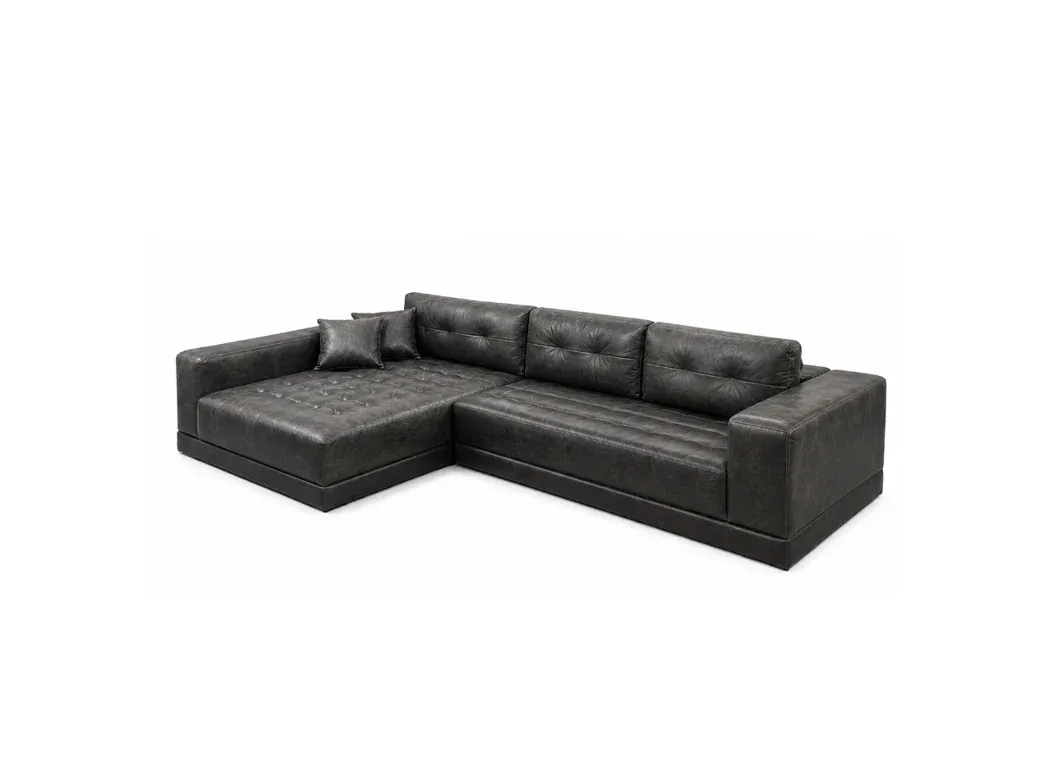
Walk into any showroom and the sofa decision usually narrows to two shapes: a long L shape sofa with a chaise, or the classic 3+2+1 sofa set — a three-seater, a two-seater and a single armchair. Both look good in a photo. Only one will suit your living hall, your walkway and the way your family actually sits. This guide compares an L shape sofa in Malaysia against a 1+2+3 sofa set on the things that decide it in real homes: room shape, traffic flow, seating capacity, TV viewing, upholstery in a humid climate, and whether the thing will even make it up your staircase.
L shape sofa vs 3+2+1 sofa set: the short answer
An L-shape (or corner sofa) is one continuous piece: a straight run of seats plus a chaise or return that turns 90 degrees into the room. A 3+2+1 sofa set is three separate pieces you arrange around a coffee table. The difference is not really about looks — it is about how each one behaves in a room.
- Lounging vs sitting. An L-shape gives you a chaise to stretch out on, which is why it wins for movie nights and afternoon naps. A 3+2+1 set is built for upright sitting and conversation, with everyone facing inward.
- One footprint vs three. An L-shape concentrates all the seating along two walls or one wall plus a corner, keeping the middle of the room open. A sofa set spreads across three positions, which usually needs more total wall length.
- Fixed vs flexible. Once an L-shape is placed, it stays. A 3+2+1 set can be rearranged for Raya or Chinese New Year open houses, split across two rooms, or moved when you rearrange the TV wall.
- Guest capacity. A typical 3+2+1 set seats six comfortably in defined places. An L-shape seats a similar number, but the corner seat and chaise end are less comfortable for guests who want their own spot.
- Cleaning underneath. Three lighter pieces are easier to shift for mopping than one heavy L-shape — a real consideration in Malaysian homes where floors get washed often.
Measure the room before you shortlist anything
Most sofa regrets are measuring mistakes, not taste mistakes. A sofa that looks compact under a warehouse-height showroom ceiling can swallow a condo living hall. Do this with a tape measure and masking tape before you fall in love with anything.
- Measure the wall the sofa will sit against, wall to wall. Then subtract roughly 30 cm at each end as breathing space — that gives you a realistic maximum sofa width, not the theoretical one.
- Measure the room depth from that wall to the TV console or opposite wall. You need to fit the sofa depth, a coffee-table gap and a walking route inside that number.
- Mark the footprint on the floor with masking tape, including the chaise return of an L-shape. Live with the tape for a day and walk the route from door to kitchen — it exposes blocked paths instantly.
- Check the doorway, window and air-con positions. A chaise that lands in front of a sliding door or under a wall-mounted air-con unit is a daily annoyance.
- Note which side the chaise should be on. Standing in the room facing the sofa, decide left-hand or right-hand facing before you order — it is the single most common ordering mistake with L-shapes.
Rules of thumb worth memorising
These are general guidelines rather than fixed rules, but they keep a living room walkable. Leave roughly 75–90 cm for a main walking route around the seating, and never less than about 60 cm for a squeeze-past. Allow around 40–45 cm between the sofa front and the coffee table — close enough to reach a drink, far enough for knees. As a rough sizing reference, three-seaters commonly run around 180–210 cm wide, two-seaters around 140–160 cm and singles around 90–100 cm; lining all three up with gaps between them can easily need four to five metres of wall in total. An L-shape's long side often falls around 250–310 cm with a return of roughly 150–180 cm. Always confirm the actual model's spec sheet — ranges vary widely by design.
Terrace and link house vs condo living hall
Malaysian living halls come in two broad shapes, and each one leans a different way. The typical terrace or link house has a long, narrow hall running from the front grille toward the dining area — usually with a through-route that everyone in the family uses a dozen times a day. A condo living hall is often squarer but smaller, frequently open-plan with the dining table, and bounded by a balcony door.
In a long narrow terrace hall, an L-shape works beautifully when the chaise is tucked into the far corner, away from the walking route — it fills dead corner space and stops the room feeling like a corridor. It fails when the return juts across the main path from the front door to the kitchen. A 3+2+1 set often suits this shape better because you can push the single seater against a wall, or even relocate it entirely.
In a compact condo hall, an L-shape usually wins on space efficiency: one piece against two walls delivers more usable seating per square foot than three separate pieces with gaps between them. The catch is circulation — if the return runs too close to the TV console or the balcony door, the room gets tight fast. Where the hall is genuinely small, a two-seater plus a single, or a compact L-shape with a slim chaise, beats forcing in a full sofa set.
Seating capacity, guests and TV viewing
Think about the two scenarios that actually happen: a normal weeknight with your household, and the once-or-twice-a-year open house with a full room of relatives. The sofa that wins on one can lose on the other.
- For everyday lounging, the L-shape is hard to beat. The chaise doubles as a daybed, kids sprawl on it, and it comfortably holds a family watching one screen together.
- For hosting, a 3+2+1 set gives guests defined, equal seats and lets everyone face each other for conversation rather than all facing the TV. It is also easier to add extra chairs into the circle.
- For TV viewing, note that the chaise end of an L-shape sits at an angle to the screen — fine for lounging, less ideal for a long film. A rule of thumb many people use is to sit roughly 1.5 to 2.5 times the screen's diagonal away on an older set, or closer to 1.2 to 1.6 times on a 4K screen, so plan your sofa position and TV wall together. Our TV cabinet design guide covers how to line up the console, screen height and seating.
- For overnight guests, neither layout beats a purpose-built sofa bed, and households where one person always claims the best seat may be happier with a set that includes a recliner instead of a single armchair.
Fabric or leather in a humid climate
Upholstery matters more here than in temperate countries, because our sofas live in warm humidity punctuated by cold, dry air-conditioning. That daily cycle of expansion and contraction is what destroys cheap upholstery, usually along the seams and fold lines first.
- Genuine leather handles humidity well and ages attractively, but wants periodic conditioning to stop it drying out, and should be kept out of direct sun near a window.
- PU and bonded leather look identical on day one and cost far less, but the coating tends to crack and flake at stress points after a few years in our climate. If budget points here, choose the thickest, best-backed grade you can and expect it to be a medium-term finish rather than a lifetime one.
- Tightly woven performance fabrics are the practical middle ground: they shrug off spills, resist staining and mildew, and dry out faster after a humid spell than loose natural weaves.
- Natural linen and cotton feel wonderful and breathe well, but they soak up moisture readily and are slower to shed stains — worth it only if you are happy to keep the covers laundered in a room that stays humid for months.
Whichever you choose, keep the sofa off a wall that gets damp, run a fan or the air-conditioner periodically in a closed hall, and vacuum fabric seams regularly — dust plus humidity is what makes upholstery smell musty.
Removable covers and modular options
If you have young children, pets, or simply eat in front of the TV, removable and washable covers change the ownership experience completely. Instead of scrubbing a stain into the weave, you unzip the affected cushion cover and wash it. Ask whether covers are fully removable or only the seat cushions, whether replacement covers can be ordered later, and how the fabric behaves after washing.
Modular seating is the third option that dissolves the whole debate. Instead of committing to one fixed shape, you buy armless units, a corner unit and an ottoman, then configure them as an L-shape today and split them into a straight sofa plus a separate chair when you move house or rearrange. It costs more per seat than a basic set, but it is the most future-proof choice for anyone who is not sure how long they will stay in the same living hall. An ottoman alone can turn a straight three-seater into a temporary L-shape.
Delivery and access: lifts, staircases and corridors
This is the step most buyers skip, and it is the one that turns a beautiful sofa into a return request. A one-piece L-shape is bulky and rigid; a 3+2+1 set arrives as three smaller, more manageable pieces. If your access is awkward, that difference alone may decide it.
- Measure the narrowest point on the route — the main gate, the grille door, the entrance door, the lift car opening and internal doorways. Compare against the sofa's height and depth, since large pieces are usually carried on their side.
- Check the lift's internal depth and door height, not just the floor area. A long chaise section may not stand upright inside the car.
- Walk the staircase mentally. Landings, turns and low ceilings above the stairs are where deliveries fail in older walk-up apartments and shophouses.
- Ask whether the sofa knocks down. Many L-shapes ship in two connecting sections, and detachable legs or backrests can save a delivery that would otherwise not fit.
- Confirm loading-bay rules and delivery time windows for condos in advance — some management offices restrict move-in hours.
The sofa that fits the room is the one that still leaves you a clear path from the front door to the kitchen. Everything else — colour, material, price — is a second-round decision. — TD Furniture
Choose an L-shape if… choose a 3+2+1 set if…
Here is the summary to take to the showroom with you.
- Choose an L shape sofa if you have a usable corner and want maximum seating per square foot; your household lounges and watches TV more than it entertains; you want a chaise to stretch out on; you are furnishing a squarish condo hall; your layout is settled and you are not planning to rearrange; and your delivery access can handle a large single piece.
- Choose a 3+2+1 sofa set if you host often and want guests facing each other; your living hall is long, narrow, or has a busy through-route; you like being able to rearrange rooms or move a piece elsewhere; you want to clean the floor underneath easily; you would rather upgrade one piece to a recliner than commit to a fixed shape; or your staircase and lift make a large one-piece sofa risky.
If you are torn, one option is to build the layout to your room rather than the other way around. As a factory-direct maker since 2002 with our own Lazio sofa brand, TD Furniture can adjust dimensions, chaise orientation and upholstery — see our Lazio sofa customisation, or bring your room measurements to a showroom in Perak or Penang and we will sketch the footprint with you.
Frequently asked questions
Is an L shape sofa suitable for a small living room in Malaysia?
It can be, provided the chaise sits in a corner and does not block the main walking route. In a genuinely small hall, a compact L-shape with a shorter, slimmer return usually works better than a full-size one, and a two-seater plus a single armchair may be better still. Tape the footprint on the floor first — if you cannot walk comfortably from the door to the kitchen with the tape down, the sofa is too big.
How much wall space does a 3+2+1 sofa set need?
As a rough guide, a three-seater is commonly around 180–210 cm wide, a two-seater around 140–160 cm and a single around 90–100 cm. Lined up with a gap between pieces, the total run often lands in the four-to-five metre range, which is why many people place the set across two or three walls rather than one. Always work from the actual model's measurements.
Can I convert an L shape sofa back to a straight sofa later?
Only if it is modular or has a detachable chaise or ottoman section. A fixed-frame corner sofa is one permanent shape. If you expect to move house or rearrange within a few years, a modular set-up or a straight sofa plus a movable ottoman gives you the same lounging comfort with far more flexibility.
