
TV Cabinet Design Ideas for a Malaysian Living Hall
A practical TV cabinet design guide for Malaysian homes: popular styles, sizing to your TV, humidity-proof materials, feature walls and cable management.
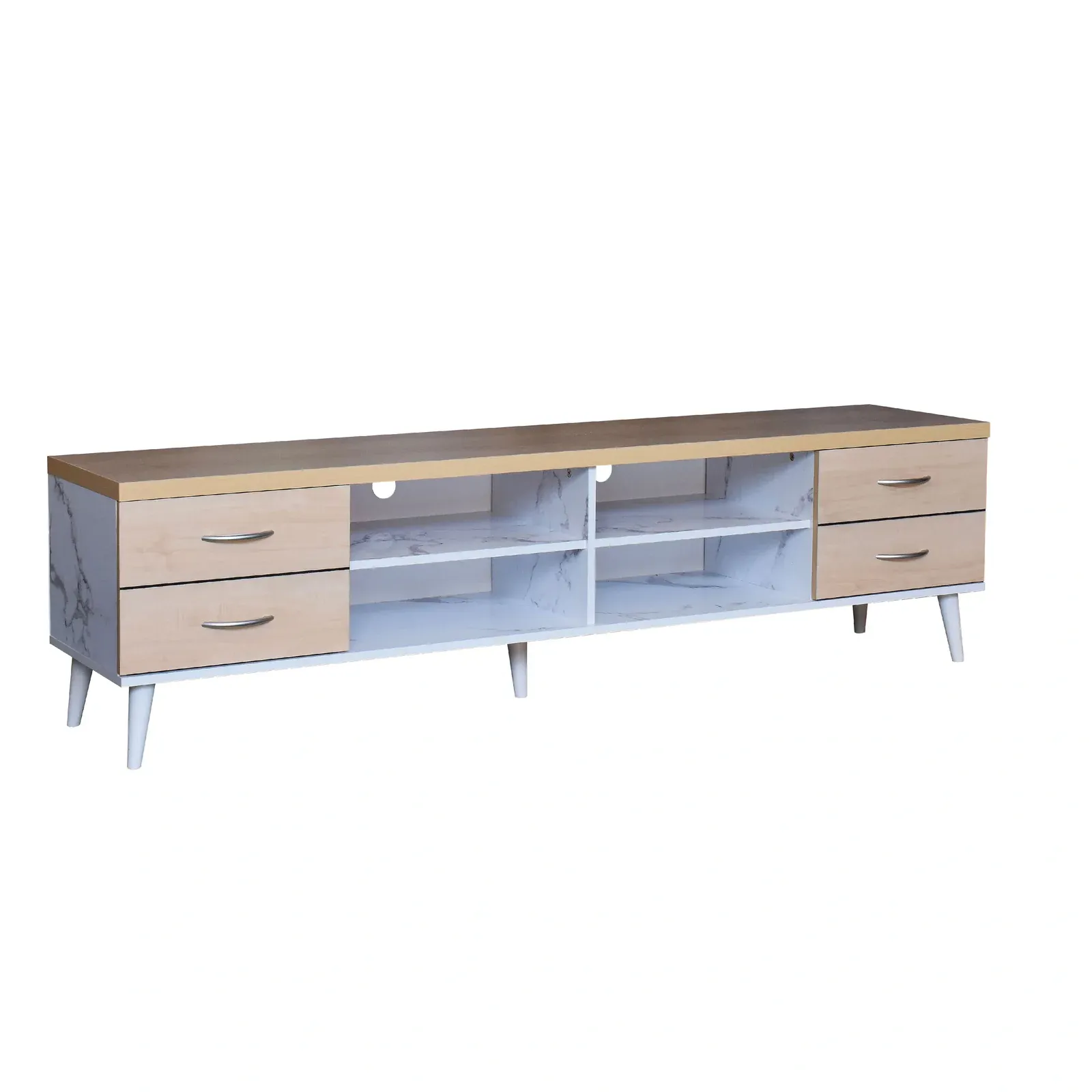
The TV wall is the part of the living hall everyone looks at, yet it is often the last thing planned — so it ends up a clutter of cables, a too-small console and a bare wall behind the screen. Get the TV cabinet design right and the whole living room falls into place: balanced proportions, hidden wires, real storage and a feature wall that ties the space together. As a Malaysian factory that custom-builds TV cabinets and feature walls for our climate, here is a practical, design-led guide to getting yours right the first time.
Popular TV cabinet design styles in Malaysian homes
There is no single "best" layout — the right one depends on your wall length, how much you need to store and the look you are after. These are the four styles we build most often for living halls in Perak and Penang.
- Floating / wall-mounted cabinet — the lowline unit is fixed to the wall with no legs touching the floor. It makes the hall feel larger and more open, makes mopping underneath easy, and pairs beautifully with a concealed LED strip below for an evening glow. The most popular modern look right now.
- Low-line floor console — a long, low cabinet that sits on the floor. It is the most flexible for storage and the simplest to install, and it gives the screen a solid visual base. A safe, timeless choice.
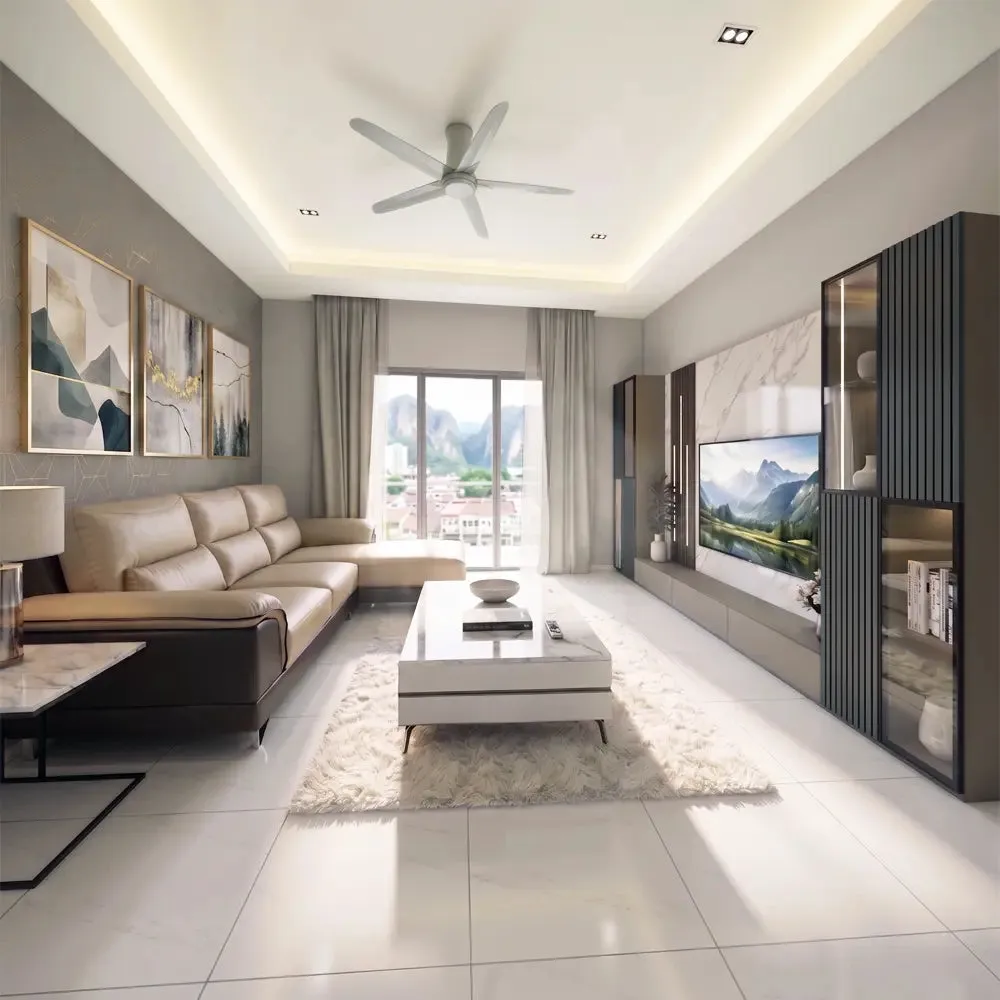
- Full feature-wall built-in — the cabinet, display niches and wall panelling are designed as one floor-to-ceiling composition. This is the most dramatic option and hides the most clutter, turning the whole wall into the centrepiece of the room.
- Cabinet with display & tall storage — a console combined with open shelving or a side tower of closed cabinets, ideal if you also want to display books, decor or store overflow from the living room.
How to size a TV cabinet to your TV and wall
The single most common mistake is a console that is too narrow for the screen. A TV that overhangs its cabinet looks top-heavy and unstable, while a well-sized unit gives the screen a confident base. The simple rule designers use is to make the cabinet noticeably wider than the TV.
- Width: aim for the cabinet to extend at least 15–30 cm (6–12 inches) beyond each side of the TV. As a quick guide, a 55-inch TV wants a console of roughly 1.5 m or more; a 65-inch TV around 1.7 m or wider. For a feature wall, scale the whole composition to the wall, not just the screen.
- Height: for comfortable seated viewing, the centre of the screen should sit close to eye level when you are on the sofa. A lower console (around 40–55 cm tall) usually achieves this far better than a tall stock TV stand that pushes the screen up too high.
- Depth: 40–45 cm of cabinet depth comfortably houses an AV receiver or media box with room behind it for cables to bend without strain.
- Proportion: for a built-in, balance solid cabinet, open display and empty wall so it does not feel heavy or cramped — leaving some breathing space around the screen reads as more premium.
Materials and finishes that survive Malaysia's humidity
A living hall is drier than a wet kitchen, but our year-round humidity still punishes poorly made furniture — cheap board swells at the edges and finishes peel. The carcass and finish matter more than the colour you pick on day one.
- Moisture-resistant plywood or board carcass — the body of the cabinet should be built from quality, moisture-resistant plywood or board with properly sealed edges, not bare particleboard that drinks in humidity.
- Laminate or PVC finish — a tough laminate or PVC surface wipes clean, resists scratches and comes in dozens of wood-grains and solid colours. It is the practical workhorse finish for a Malaysian living room.
- Melamine — a cost-effective, wipe-clean surface for shelving and interiors, best over a moisture-resistant core with sealed edge banding.
- Sintered stone or marble-look tops — for a console top that takes daily use, a sintered stone surface is heat-, scratch- and stain-resistant and gives that premium marble look without the maintenance of real stone.
- Glass and aluminium accents — fluted or clear glass display fronts and slim aluminium framing add a hotel-style, modern edge and resist humidity well.
A beautiful TV wall that swells at the edges in two rainy seasons is a false economy. In our climate the carcass and the edge sealing matter as much as the finish you fall in love with. — TD Furniture
Cable management and electronics ventilation
Nothing undoes a clean design faster than a tangle of visible cables — and nothing kills electronics faster than trapped heat. Both are solved at the design stage, not after the cabinet is installed, which is the quiet advantage of a custom build over a ready-made console.
- Plan the power and data points first. Decide where the wall socket, TV point and any HDMI runs sit before the cabinet is built, so the openings line up and nothing is left exposed.
- Build in cable channels and back notches. Concealed channels and notched-out shelf backs let wires drop neatly to the floor outlet while leaving room for the cable to bend without being pinched.
- Leave breathing room for components. An AV receiver, media box or game console needs roughly 5–8 cm of clearance around it so heat can escape instead of recirculating.
- Ventilate enclosed compartments. If components sit behind closed doors, add ventilation slots or an open back so air can flow through — sealed boxes cook electronics and shorten their life.
Storage planning: open, closed and the soundbar gap
Good storage is what separates a designed TV wall from a glorified shelf. Think about what actually lives there — remotes, game controllers, cables, a router, kids' clutter — and design closed storage to hide it, with just enough open display to keep the wall from looking like a solid block.
- Closed cabinets and drawers hide the unglamorous reality — routers, wires, spare remotes and clutter. Aim for more closed storage than you think you need.
- Open display niches break up the mass with books, plants or decor, and give the eye somewhere to rest. Adding a discreet LED here lifts the whole wall in the evening.
- A dedicated soundbar gap — if you have or plan a soundbar, design an open shelf at the right height directly under the screen so sound is not muffled behind a closed door.
- Pair it with a side unit — for serious storage, a matching display cabinet or hall cabinet alongside the console extends the look without overcrowding the TV wall itself.
Turning a TV cabinet into a feature wall
A TV cabinet feature wall is what makes a living hall feel finished rather than furnished. Instead of a screen floating on a bare wall, the cabinet, the wall behind the TV and the lighting are designed as one composition that anchors the whole room.
- Panelling behind the screen — fluted wood, laminate panels or a stone-look surface behind the TV adds texture and a hotel-style feel, and hides the visual noise of the screen and cables.
- Layered lighting — a concealed LED strip under a floating cabinet or behind wall panels gives a soft ambient glow that is kinder on the eyes during evening viewing than a single bright ceiling light.
- Carry the design through — echoing the cabinet's finish or colour elsewhere in the living room ties the space together. Browse our living room range to see how pieces can coordinate.
- Scale to the room — in a double-height or wide hall a full floor-to-ceiling wall pays off; in a compact condo, a floating cabinet with a slim accent panel keeps things light.
Ready-made or custom-built: which to choose
A ready-made console is quicker and cheaper, and for a simple rented space it is often the sensible call. But a custom TV cabinet design wins whenever the wall is an awkward size, you want a true feature wall, or you care about hidden cabling and ventilation done properly — because all of that is designed in, not bodged afterward.
- Choose ready-made if — your wall is a standard size, your needs are simple, and you may move soon.
- Choose custom if — your wall is unusually wide, narrow or has obstructions; you want a floor-to-ceiling feature wall; you need built-in cable and ventilation; or you want finishes that match the rest of your custom interior.
Frequently asked questions
How wide should my TV cabinet be?
Wider than the TV — ideally extending at least 15–30 cm beyond each side of the screen so it never overhangs. A 55-inch TV is comfortable on a console of about 1.5 m or more; a 65-inch TV on around 1.7 m or wider. For a full feature wall, size the composition to the wall rather than the screen alone.
What material is best for a TV cabinet in Malaysia?
For our humid climate, a moisture-resistant plywood or board carcass with a quality laminate or PVC finish is the practical, durable choice, and a sintered stone top resists heat and stains on a console surface. Make sure the edges are properly sealed — that is what stops humidity creeping into the board.
How do I hide the cables behind my TV?
Plan it before the cabinet is built. Position the power and TV points behind the unit, build in concealed cable channels and notched shelf backs, and leave ventilation gaps so components stay cool. This is far easier with a custom-built feature wall than with a standalone console added later.
