
Shoe Cabinet Ideas & Buying Guide for Malaysian Homes
A practical shoe cabinet and shoe rack buying guide for Malaysian homes: types, sizing, ventilation for wet shoes and odour, plus climate-ready materials.
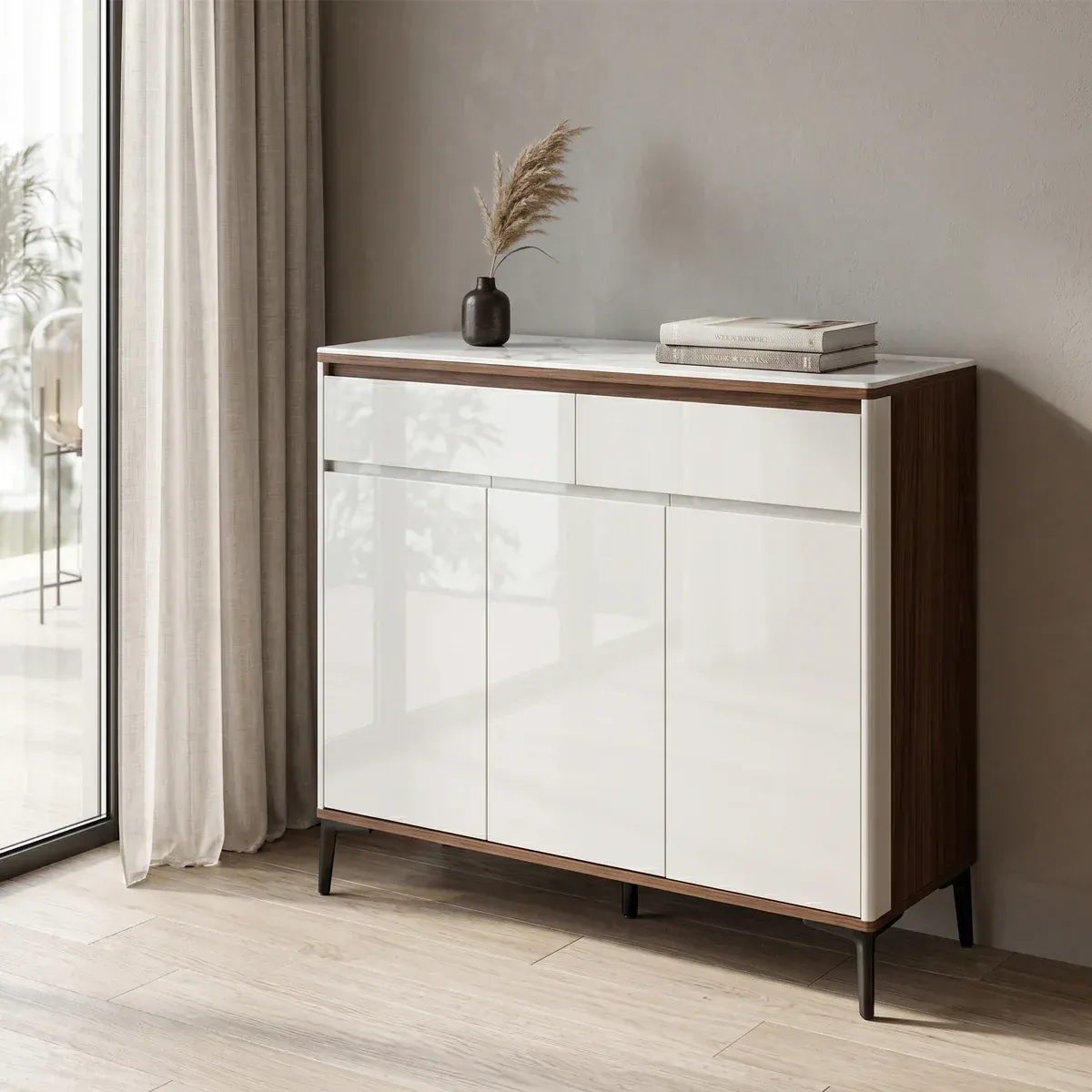
In most Malaysian homes, shoes come off at the door — it keeps outdoor grime out of the house. But without the right storage, that habit turns the entrance into a messy pile everyone trips over. A proper shoe cabinet (some call it a shoe rack cabinet) fixes that: it keeps the entryway tidy, protects your shoes, and gives guests a clean first impression the moment they step in. As a Malaysian factory that custom-builds shoe cabinets for our hot, humid, rainy climate, here is a practical ideas and buying guide to help you choose the right one.
Why a proper shoe cabinet beats a pile at the door
An open heap of shoes is more than an eyesore. It is a trip hazard, it lets dust and grit spread across the floor, and it wears your shoes out faster as pairs get kicked around and crushed. A closed or semi-closed cabinet solves all of that at once — and in a small Malaysian entryway, that tidy first metre of the home makes a bigger difference than its footprint suggests.
- A tidy, welcoming entrance — shoes disappear behind doors instead of sprawling across the floor, so the first thing you and your guests see is clean and calm, not cluttered.
- Protects your shoes — stored in pairs on a shelf, shoes keep their shape and stay off a damp, dusty floor, so leather does not scuff and soles do not warp.
- Keeps the home cleaner — a defined drop-off point at the door reinforces the shoes-off habit, so outdoor grime, sand and rainwater stay by the entrance instead of tracking through the house.
- Doubles as useful furniture — the right cabinet adds a surface for keys, a seat to put shoes on, or hooks for umbrellas, earning its place in a tight entryway.
Types of shoe cabinet and shoe rack
There is no single best shoe cabinet design — the right one depends on how many pairs you own, how much floor space your entrance has, and whether you want the cabinet to do a second job. These are the styles we build and see most in Perak and Penang homes.
- Tall, slim tower cabinet — a narrow, floor-to-near-ceiling unit that stores a lot of pairs in very little floor space. The go-to choice for the tight entryways of condos and terrace houses, where depth is scarce but height is free.
- Low bench-top cabinet — a waist-low cabinet with a solid top you can sit on to put shoes on and take them off. Comfortable, family-friendly, and the top doubles as a drop zone for keys and bags.
- Flip-drawer (tilt-out) cabinet — shallow tilt-out compartments hold shoes on a slant, so the cabinet needs far less depth than a normal shelf. Ideal for a narrow hallway where a standard cabinet would jut out too far.
- Sideboard-style cabinet — a longer, low cabinet that works as an entry console as well as shoe storage, with a display top for a lamp, tray or plant. Browse our console and sideboard range for pieces that suit this dual role.
- Shoe cabinet with mirror and hooks — a combo unit with a full-length mirror for a last-minute check and hooks for keys, bags or umbrellas, turning the whole entryway into one organised station.
- Open shoe rack vs closed cabinet — an open rack is cheaper and airy, but shoes stay visible and gather dust; a closed cabinet hides the clutter and controls odour, but needs built-in ventilation. Most Malaysian homes are happiest with a closed cabinet that has vented doors or a gap for airflow.
Sizing and capacity: how many pairs do you need?
The most common regret is buying a cabinet that is already full on day one. Before you choose, count the pairs your household actually owns — then add room to grow. A quick guide: a compact cabinet roughly 60 cm wide holds around a dozen everyday pairs, while a full-height tower or a wide sideboard-style unit can take 20 pairs or more.
- Count pairs per person — tally everyday shoes, work shoes, sports shoes and slippers for everyone in the home, then leave a shelf or two spare so it is not bursting within a year.
- Adjustable shelves for tall footwear — boots, heels and kids' shoes all need different heights. Adjustable or removable shelves let you free up clearance for tall pairs instead of forcing everything into one fixed gap.
- Enough depth for large sizes — a shelf around 30–35 cm deep comfortably fits most adult shoes; if anyone in the home wears large sizes or chunky trainers, size the depth to the biggest pair, not the average.
- Match the footprint to your entryway — measure the wall space and the door swing first. In a narrow Malaysian entrance, build up with a slim tower or tilt-out drawers rather than out with a deep cabinet that blocks the walkway.
Ventilation, odour and wet shoes: the Malaysian essentials
This is the section that matters most in our climate, and the one cheap ready-made cabinets ignore. Malaysia is hot and humid year-round, and our afternoon downpours mean shoes regularly come home wet. Seal shoes into an airtight box and you trap moisture — which is exactly how you get odour, mildew and even mould inside a shoe cabinet.
- Airflow is non-negotiable — choose a cabinet with vented or louvred doors, a slotted or open back, or simply leave a small gap so air can move through. Spacing pairs a little apart on the shelf also lets them breathe instead of trapping damp between them.
- Give wet, rainy-day shoes their own spot — never shut soaked shoes into a closed compartment. Keep an open lower shelf, a tray or an airy section where rain-drenched shoes can dry before they go away. A boot dryer or a wad of newspaper speeds it up.
- Easy-wipe surfaces — the entryway meets mud, sand and rainwater, so pick finishes you can wipe down in seconds. A wipeable interior shelf is far more hygienic than raw board that soaks up every spill.
- Keep shoes off a damp floor — raising shoes onto a shelf, off the tiles, protects soles from a wet floor and makes mopping the entrance easy. A simple bag of baking soda or a charcoal sachet inside the cabinet quietly absorbs odour between cleans.
Placement and doubling up
In a compact home, the best shoe cabinet earns its keep by doing more than one job. Because it sits right at the threshold, it is perfectly placed to define the entrance and add a surface or a seat exactly where you need them.
- As a low entryway divider — in a condo where the front door opens straight into the living hall, a waist-high shoe cabinet placed across the threshold marks off a small foyer while keeping the view open above it. See our room divider range for how a low unit can zone an open-plan space.
- As a bench for seating — a bench-top cabinet gives you somewhere to sit and slip shoes on and off, which is far kinder than balancing on one leg by the door, especially for kids and older family members.
- As a display and drop zone — the top of a low or sideboard-style cabinet becomes the natural landing spot for keys, wallets, sunglasses and a small tray, so nothing gets lost on the way out the door. It also ties the entrance into your living area when the two share a space.
Materials and finishes for our climate
The entryway is one of the damper, dirtier corners of a Malaysian home — it meets rain, mud and humidity daily. That punishes cheaply made furniture: bare board swells at the edges, and finishes bubble and peel. For a shoe cabinet, the carcass and the edge sealing matter as much as the colour you pick.
- Moisture-resistant board with sealed edges — the body should be built from quality, moisture-resistant board or plywood with properly sealed edge banding, not raw particleboard that drinks in humidity and swells at the corners.
- Powder-coated metal frames — for a slim, modern rack, a powder-coated metal frame resists rust and moisture far better than untreated steel, and it wipes clean easily.
- Avoid finishes that swell or peel — steer clear of thin veneers and low-grade laminates that lift at the edges in a damp entrance. A tough laminate or PVC surface over a moisture-resistant core is the practical, long-lasting choice here.
- Easy-clean surfaces throughout — a wipeable exterior and interior means a quick cloth removes the sand, dust and rainwater the entryway collects, keeping the cabinet hygienic with almost no effort.
A shoe cabinet lives where rain, mud and humidity meet the house every single day. In our climate, sealed edges and real airflow matter as much as the finish you fall in love with. — TD Furniture
Shoe cabinet buying checklist
- Count the pairs your household owns today, then add room to grow so it is not full on day one.
- Measure the wall space and the door swing, and decide whether to build up (slim tower) or along (sideboard style).
- Choose the type — tall tower, bench-top, tilt-out drawer, sideboard console, or mirror-and-hooks combo.
- Check for adjustable shelves so boots and tall shoes fit alongside everyday pairs.
- Confirm real ventilation: vented doors, a slotted back or a deliberate gap for airflow.
- Set aside an open spot for wet, rainy-day shoes to dry before they go away.
- Pick moisture-ready, wipe-clean materials with sealed edges built for a humid entrance.
- Decide if it should double up — as a divider, a seat, or a drop zone for keys.
Frequently asked questions
How deep should a shoe cabinet be?
Around 30–35 cm of internal shelf depth comfortably fits most adult shoes lying flat. If anyone in the home wears large sizes or chunky trainers, size the depth to the biggest pair. In a narrow entryway where depth is tight, a tilt-out flip-drawer cabinet holds shoes on a slant and needs far less depth than a flat shelf.
How do I stop my shoe cabinet from smelling?
Odour comes from trapped moisture, so ventilation is the real fix. Choose vented doors or a slotted back, space pairs a little apart so air can move, and never shut wet shoes into a closed compartment — let rain-soaked pairs dry in an open section first. A bag of baking soda or a charcoal sachet inside the cabinet absorbs any lingering smell between cleans.
Should I choose an open shoe rack or a closed shoe cabinet?
An open rack is cheaper and naturally airy, but shoes stay on show and collect dust. A closed cabinet hides the clutter, keeps the entrance looking tidy, and controls odour — as long as it has built-in ventilation. For most Malaysian homes, a closed cabinet with vented doors or an airflow gap gives you the best of both: a neat entrance without trapped damp.
