
Room Divider & Partition Ideas for Malaysian Homes
Practical room divider and partition ideas for Malaysian open-plan condos and small homes: types, placement, open vs solid and humidity-ready materials.
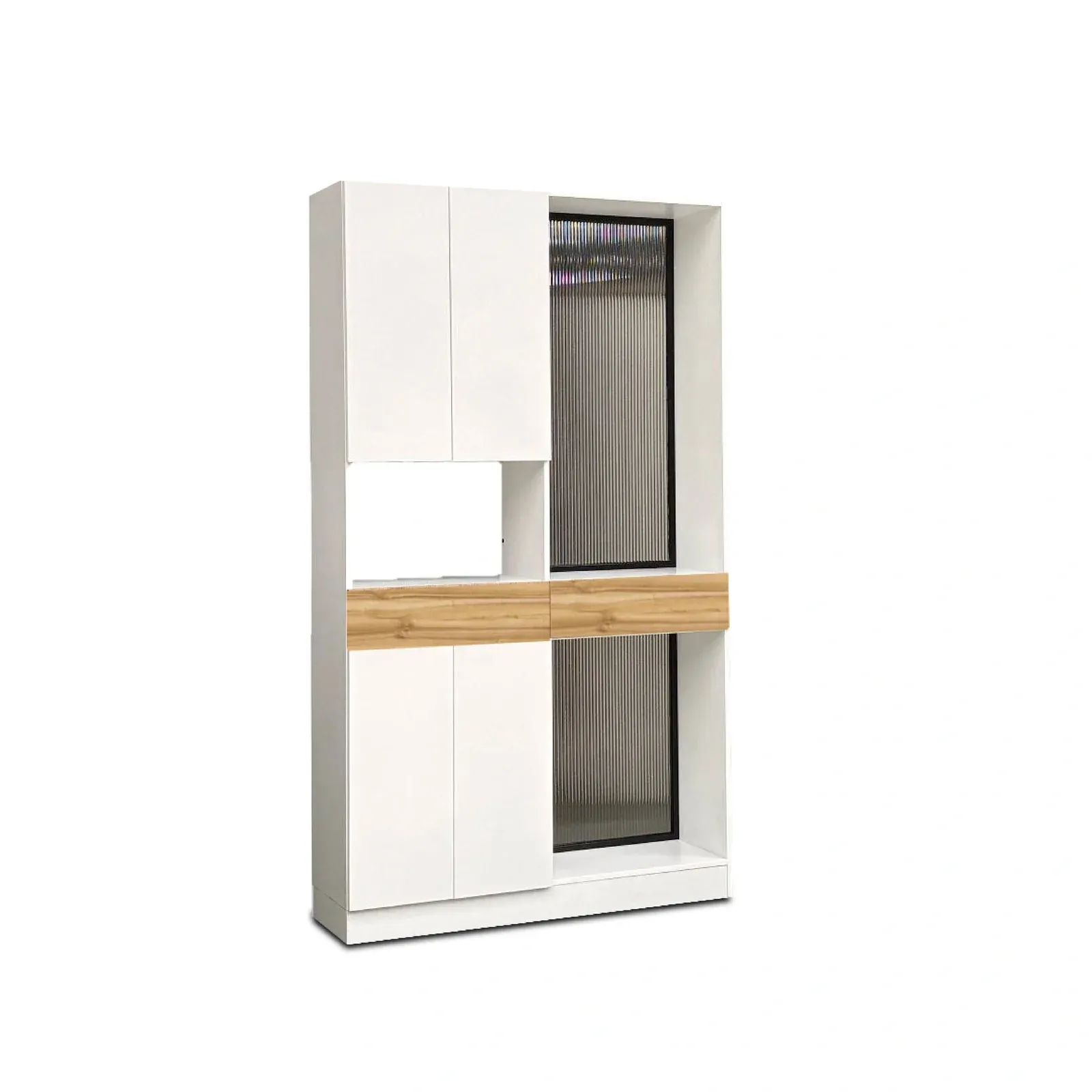
Open-plan living looks great in the showroom, but real life needs zones — a spot for the sofa, a place to eat, a landing pad by the front door. A room divider lets you draw those lines without building a permanent wall, and in a Malaysian condo or apartment that is often the smarter move: it keeps air and daylight moving, it comes apart when you move, and it costs a fraction of a renovation. As a Malaysian factory that custom-builds room dividers and partitions for our climate, here is a practical, design-led guide to choosing the right one.
Why choose a room divider instead of a wall
A solid wall is permanent, blocks light and air, and needs hacking work, wiring and repainting. A partition gives you most of the definition with almost none of the downside — which is why it suits how most of us actually live in Malaysian high-rises and compact landed homes.
- Defines zones in an open plan — a divider separates living, dining and the entryway into distinct areas so a single open space finally feels like rooms, not one big hall.
- Keeps air and light moving — in our hot, humid climate an open or slatted divider lets breeze and daylight pass right through, so you do not trap heat or block the natural cross-ventilation a wall would kill.
- Renter- and reno-friendly — a freestanding piece needs no hacking, no permit and no making-good later. When you move, it moves with you.
- Far cheaper than building — a divider costs a fraction of a bricked wall or built-in carpentry, with no dust, wet works or downtime.
- Doubles as storage or display — unlike a wall, the right divider earns its footprint by holding books, decor and everyday clutter on the way.
Types of room dividers and partitions
There is no single "best" partition design — the right one depends on how much privacy you want, how much you need to store and the look you are after. These are the divider types we build and see most often in Perak and Penang homes.
- Freestanding open-shelf divider — a cube or ladder-style unit open on both sides. It splits a space while you can still see through it, so a small room never feels boxed in, and every shelf is usable storage or display. The most versatile choice for a condo.
- Slatted or fluted wood screen — vertical timber battens with gaps between them. It reads as a warm, architectural feature, filters the view without fully blocking it, and lets air flow straight through — ideal for our climate.
- Low cabinet or sideboard as a divider — a waist-height sideboard or console placed back-to-back with the sofa marks the edge of the living zone while keeping sightlines open above it, and hides clutter inside.
- Glass display cabinet as a see-through partition — a display cabinet with glass fronts divides two zones yet lets light through both sides and shows off crockery, books or collectibles.
- TV feature unit that splits living and dining — a double-sided or free-standing TV cabinet works as a room divider and a media wall at once, facing the sofa on one side with storage on the other.
- Curtain or sliding options — a ceiling track curtain or sliding panel is the softest, cheapest partition and disappears when open, though it gives less structure and no storage. Handy for a bedroom nook.
Where room dividers work in a Malaysian home
The best partition solves a specific problem in the layout. These are the spots where a room divider earns its place in a typical local condo, apartment or small landed home.
Entryway screen
Many condos open straight into the living room, so the front door reveals the whole hall at a glance. A slim divider or slatted screen just inside the door creates a small foyer, gives you a moment of privacy, and offers a spot for keys, shoes and bags before the living space begins.
Living and dining split
The most common job of all: separating the living area from the dining table in one open hall. A low sideboard behind the sofa, a double-sided TV unit or an open-shelf divider marks the boundary while keeping the whole space bright and connected.
A study nook or a studio bedroom
Working from home means carving out a desk zone that switches off at the end of the day; a shelf divider does that without a second room. In a studio or a shared bedroom, a partition between the sleeping and work — or the sleeping and living — zone lets one room do two jobs and makes rest feel separate from everything else.
Open vs solid: balancing privacy, light and airflow
The single biggest decision is how much you see through the divider. This is not just a style choice in Malaysia — a solid partition in the wrong spot traps heat and blocks the cross-breeze, leaving a corner stuffy and dark. Match the openness to what the space actually needs.
- Open (shelves, slats, glass) — lets light and air pass through, keeps a small room feeling large, and defines a zone without closing it off. Best for living-dining splits and anywhere ventilation matters, which in our climate is almost everywhere.
- Solid (closed cabinet, full panel) — gives real privacy and hides mess completely, useful for a bedroom or a WC that is in view. The trade-off is blocked light and air, so keep solid sections short and away from your main breeze path.
- The middle ground — a piece that is solid at the base for hidden storage and open above for sightlines and airflow gives you the best of both, which is why sideboard-height and open-top dividers are so popular here.
Materials and finishes for our humidity
A divider stands in open air, but our year-round humidity still punishes furniture built on the cheap — bare board swells, veneers lift and finishes peel. Because a partition is seen from both sides, its build quality is on full display, so the carcass and finish matter as much as the look.
- Moisture-resistant board or plywood with sealed edges — the body should be quality, moisture-resistant board or plywood with properly sealed edges, not bare particleboard that drinks in humidity and swells at the corners.
- Solid or engineered wood for slats — for a slatted screen, solid or well-made engineered timber holds its shape better than thin trims that can bow over time.
- Laminate or PVC finish — a tough, wipe-clean laminate or PVC surface resists scratches and moisture and comes in dozens of wood-grains and colours. The practical workhorse finish for a Malaysian home.
- Powder-coated metal frames — for slim, modern framing, a powder-coated metal finish resists humidity and rust far better than untreated steel.
- Finish both faces — because a divider is seen from both sides, both faces need a proper, sealed finish; avoid pieces with a raw or unfinished back.
A partition is the one piece of furniture seen from both sides at once. In our climate, sealed edges and a properly finished back matter as much as the face you fall in love with. — TD Furniture
Styling and practical tips
A divider that is planned well disappears into the design; one that is not becomes a clumsy obstacle in the middle of the room. A few rules keep it working hard and looking intentional.
- Make it earn its footprint — choose a divider that also stores or displays. In a small home, a piece that only blocks the view is a piece you will resent.
- Protect the sightlines — keep the open sections at eye level so the eye travels across the room; a wall of solid storage at head height makes a small space feel cramped.
- Do not overcrowd — a divider already breaks up the room, so keep its shelves styled lightly. Cramming every cube full defeats the airy effect you wanted.
- Add light — a slim LED strip or a lamp on a divider gives a soft glow in the evening and stops an open partition reading as a dark screen after dark.
- Scale to the room — a full-height screen anchors a tall, wide hall; in a compact condo, a waist- or shoulder-height divider defines the zone without walling you in.
- Privacy is a preference — some homeowners like to screen the front door from the living room, whether for a sense of arrival or on feng-shui grounds. Treat it as personal taste and choose the openness that feels right to you.
Room divider buying checklist
- Pin down the job — entryway screen, living-dining split, study nook or bedroom zone.
- Decide how open it should be, balancing privacy against light and cross-ventilation.
- Measure the width and, for a freestanding piece, check it clears walkways on both sides.
- Pick the type — open shelf, slatted screen, low sideboard, glass display or double-sided TV unit.
- Choose whether it should store or display, and how much.
- Confirm humidity-ready materials: moisture-resistant board, sealed edges and a finished back on both faces.
- Match the finish to your living room or the rest of your furniture for a coordinated look.
Frequently asked questions
What is the difference between a room divider and a partition?
In everyday use they mean the same thing — a freestanding or semi-fixed element that separates one zone from another without a full wall. "Partition" is sometimes used for taller or built-in screens, while "room divider" often describes a movable furniture piece like an open shelf or a sideboard, but the two terms are used interchangeably.
Will a room divider make my small condo feel smaller?
Not if you pick an open one. An open-shelf or slatted divider defines a zone while you can still see and breathe through it, so the space stays bright and feels larger, not boxed in. A solid, full-height partition is what can make a small room feel cramped — reserve those for spots where privacy truly matters.
What is the best room divider for a rented home?
A freestanding piece — an open-shelf divider, a slatted screen or a sideboard behind the sofa. It needs no drilling, hacking or permission, defines your zones straight away, and simply comes with you when you move. That makes it the ideal partition for a rental or any home you may not stay in long.
