
Coffee Table Ideas & Buying Guide for Malaysian Homes
How to choose a coffee table for a Malaysian living room: sizing to the sofa, the best shapes, humidity-ready materials, storage and styling tips.
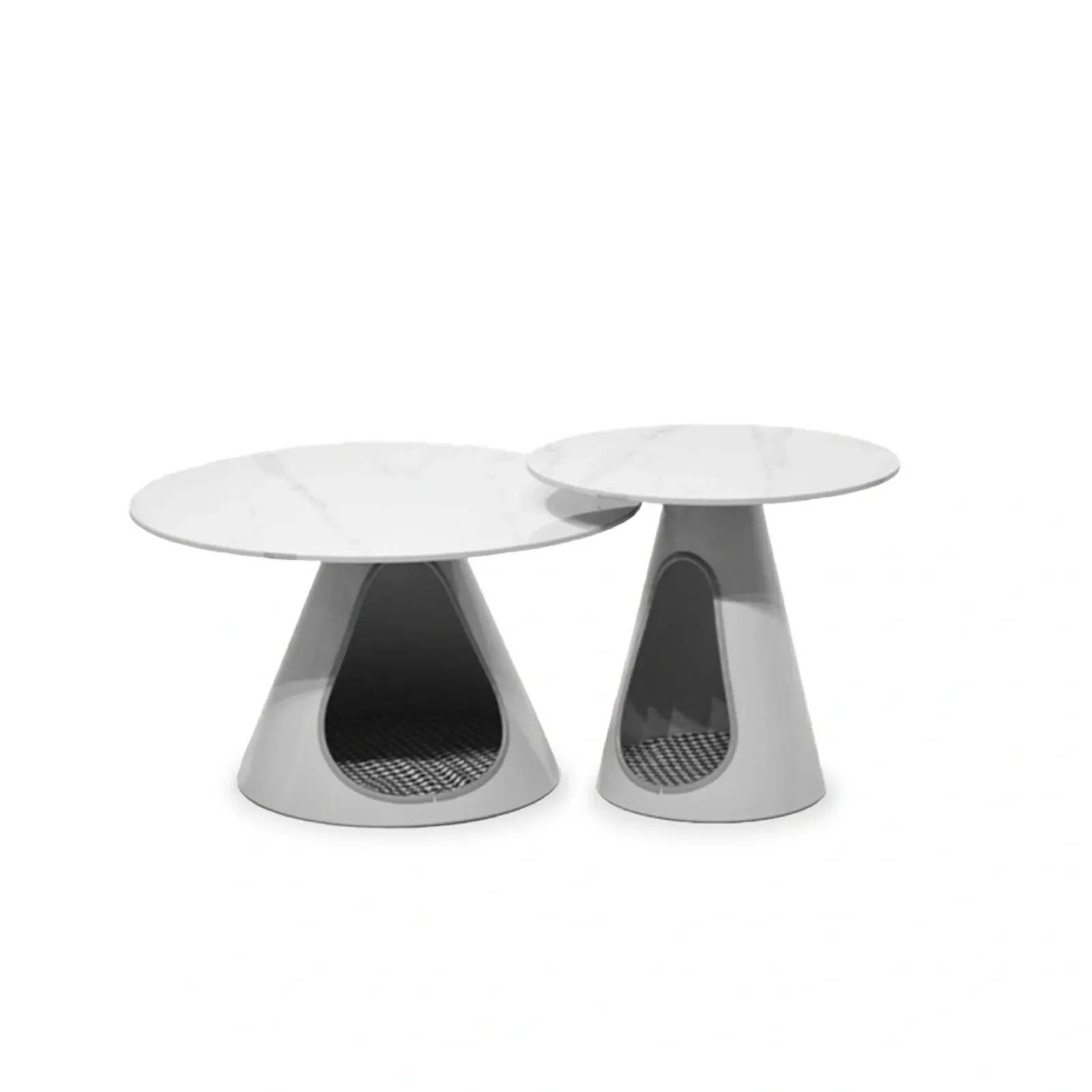
The coffee table is the piece that pulls a living room together. It sits right in the middle of everything — the anchor your sofa, armchairs and TV wall arrange themselves around — and it quietly does the daily work: a spot for your coffee, the remote, a book and a plant. Get it wrong and the room feels either cramped or oddly empty; get it right and everything else falls into place. As a Malaysian factory that custom-builds coffee tables for local homes, here is a practical guide to choosing the right size, shape, material and style for your space — whether that is a compact condo, a terrace house or an open-plan living hall.
Why the coffee table is the anchor of the room
In most Malaysian living halls the sofa faces the TV wall, and the coffee table sits in the gap between them. That central position makes it do three jobs at once. First, it ties the seating together — it visually connects the sofa to the armchairs and the rug, so the arrangement reads as one considered group rather than furniture pushed against the walls.
Second, it is a working surface: drinks and snacks for guests, the TV remote, a laptop on a lazy Sunday, a board game with the kids. Third, it is a style statement — the one horizontal surface at eye level when you are seated, so a well-chosen table with a considered arrangement of decor on top sets the tone of the whole room. Because it earns its keep on all three fronts, it is worth a little planning rather than grabbing the first table that fits.
Coffee table size and proportion: getting it right
More than anything, the right coffee table size is what makes a room feel balanced. A table that is too big swallows the walkway; one that is too small looks like an afterthought floating in front of the sofa. A few simple proportion rules keep it looking intentional.
- Length — about two-thirds of the sofa. Aim for a table roughly two-thirds the length of the sofa it serves. For a typical three-seater of around 2.1 m, that points to a table of about 1.2–1.4 m. It should feel related to the sofa, not stretch the full length of it.
- Height — level with, or just below, the sofa seat. The tabletop looks and works best when it sits level with the sofa cushion or up to about 5 cm lower. Most sofa seats sit around 40–45 cm, so a coffee table of a similar height is the comfortable norm — easy to reach a drink without stretching.
- Distance from the sofa — a hand's reach. Leave roughly 30–45 cm between the sofa edge and the table: close enough to set down a cup without leaning, far enough for legroom. About 30 cm is the practical minimum.
- Walking clearance around it. Keep at least 45 cm of clear floor between the table and any other furniture — a TV cabinet, an armchair — so people can walk past comfortably without a shin-barking squeeze.
- Scale to the room, not just the sofa. In a large open-plan hall a small table looks lost; in a compact condo an oversized slab eats the whole space. Step back and check the table against the whole room, not only the sofa in front of it.
Small-condo sizing tips
In a tight condo living room, the coffee table is often the piece most worth shrinking. Choose a slimmer or round table that keeps the walkway clear, or a nesting set you can pull apart when guests come and tuck back together the rest of the time. A table with a lower shelf or drawers also lets you go smaller on the footprint while keeping the storage — more on both below.
Coffee table shapes and when to use each
Shape is not just a look — it decides how the table fits your sofa layout and how safely it lives in a busy home. Here is how the common coffee table designs earn their place.
- Rectangular — the classic, and the natural partner for a long sofa or an L-shape. Its length mirrors the sofa and it offers the most usable surface, which is why it is the default choice for most living halls.
- Round or oval — the smart pick for small spaces and homes with young children, because there are no sharp corners to bump into or catch a hip on. A round table also softens a room full of straight lines and eases the flow of foot traffic in a tight layout.
- Square — best paired with a large sectional or an L-shape sofa, where a generous square fills the space in front of the seating and keeps everything within easy reach from any seat.
- Nesting tables — two or three tables of different heights that tuck under one another. They are the flexible, small-space hero: keep them nested to save floor space, then slide them out as extra surfaces when you have guests. Our ceramic-top Helixon nesting set is a good example of the look — two tables that work as one sculptural piece or split apart on demand.
- A pair of small tables instead of one big one — two matching or contrasting tables give you the same surface with far more flexibility; rearrange them, split them across the room, or slide one aside when you need floor space. A neat trick in a room that changes use through the day.
Materials and finishes for our climate
A coffee table takes daily abuse — hot mugs, spilled drinks, feet, kids — all in a climate that punishes poorly made furniture. Malaysia's year-round heat and humidity swell cheap board and lift thin finishes, so the top and the core matter as much as the colour you fall for.
- Sintered stone, ceramic and marble-look tops — the easy-living choice. These surfaces are heat-, scratch- and stain-resistant, and wipe clean in seconds, so a hot drink or a curry splash leaves no mark. They give the premium marble look without the fussy sealing real marble needs in our humidity.
- Solid and engineered wood — warm and timeless, and hard-wearing when built and sealed properly. Look for a stable, well-finished piece rather than raw timber that can move and crack as the air swings between dry and damp.
- Glass — light and airy, and a good way to keep a small room feeling open because the eye passes straight through it. The trade-off is upkeep: glass shows every fingerprint, dust speck and water ring, so it needs frequent wiping to look its best.
- Metal frames — slim powder-coated or stainless steel legs add a modern edge and hold up well against humidity, and they pair beautifully with a stone or wood top.
- Moisture-resistant board with sealed edges — for a built-up or laminate table, insist on a moisture-resistant core with properly sealed edge banding. Bare particleboard drinks in humidity and swells at the corners; sealed edges are what keep the damp out.
- Avoid finishes that warp or ring-mark — steer clear of thin veneers and delicate lacquers that cloud from a hot cup or lift at the edges in a damp room. An easy-wipe top over a stable core lasts far longer here.
A coffee table lives its whole life under hot drinks and daily use, in a climate that swells cheap board and rings soft finishes. The easy-wipe top and the sealed core are what keep it looking new past the first rainy season. — TD Furniture
Storage and function: keeping a small space tidy
In a compact living room, the coffee table can quietly solve your clutter problem. The right storage features turn it from a bare surface into the tidiest spot in the room — a place for the remotes, chargers, coasters and magazines that otherwise drift everywhere.
- Drawers — hide the small clutter that collects on any coffee table: remotes, chargers, pens, coasters, kids' odds and ends. A drawer or two keeps the top clear and the room calm.
- An open lower shelf — perfect for a couple of woven baskets, a stack of books or board games. It doubles your surface without adding bulk, and the baskets hide the mess while looking deliberate.
- Lift-top tables — the top rises and pulls toward you to become a work or dining height, with storage hidden underneath. A clever choice if you eat, work or study from the sofa in a home without a dedicated desk.
- Closed vs open — closed storage hides more but adds visual weight; an open shelf feels lighter and airier. In a small condo, one drawer plus one open shelf is often the sweet spot between tidy and light.
How to style a coffee table
Good coffee table decor is the difference between a table and a centrepiece — but the goal is a styled surface you can still use. The reliable approach is to build a small, layered vignette on one part of the top and leave the rest clear for real life.
- Use the tray trick — a flat tray corrals the small stuff (remote, coasters, a candle) into one tidy zone and makes a random group look intentional. It is the single easiest way to style a table, and you can lift the whole lot off in one go.
- Layer a stack of books — two or three books add height and a base to rest a smaller object on top. They bring colour and personality, and double as something to actually flip through.
- Add a low vase or a plant — greenery or a few stems softens the hard surface and brings the table to life. Keep it low enough to see over so it does not block the room across the table.
- Balance height and negative space — vary the heights (something tall, something flat), group in odd numbers, and leave empty space around the arrangement. The gaps are what make it read as considered rather than cluttered.
- Leave room to actually use it — never fill the whole surface. Keep a clear stretch for cups, plates and the laptop, so styling never gets in the way of daily life.
- Refresh with the seasons — the vase, the stems, a single decorative object are the easy things to swap for a festive or seasonal change without redoing the whole room.
Pairing your coffee table with the rest of the room
A coffee table rarely stands alone — it lives among the sofa, the TV wall and the side tables, and it looks best when those pieces speak to one another. You do not need everything to match exactly; you need it to coordinate.
- Coordinate with the sofa — the coffee table serves the sofa first, so size it to the sofa (that two-thirds rule) and let the two feel related. Browse our sofa collection to see how a table sits with different seating.
- Echo or contrast the TV cabinet — the coffee table and the TV cabinet are the two low horizontals facing each other across the room, so a shared finish or a deliberate contrast ties the whole living hall together.
- Match the side and console tables — repeating a top material or leg finish across the coffee table, side tables and a console or sideboard makes a room feel designed rather than assembled.
- Think of the room as a set — for a coordinated look from the start, our wider living room range lets you match the coffee table to the pieces around it in finish and style.
Coffee table buying and styling checklist
- Measure your sofa and aim for a table about two-thirds its length.
- Match the height to the sofa seat — level or up to 5 cm lower.
- Leave 30–45 cm to the sofa and at least 45 cm of walking clearance around it.
- Pick the shape for your layout — rectangular for a long sofa, round for small spaces and kids, square for a sectional, nesting for flexibility.
- Choose an easy-wipe, humidity-ready top (sintered stone or sealed wood) over a stable, moisture-resistant core.
- Decide your storage — drawers, an open shelf, or a lift-top — especially in a small home.
- Style with a tray, a stack of books and a low plant, and leave space to actually use the table.
- Coordinate the finish with your sofa, TV cabinet and side tables so the room reads as one.
Frequently asked questions
What size coffee table should I get for my sofa?
Aim for a table roughly two-thirds the length of your sofa and about the same height as the sofa seat, or up to 5 cm lower. For a standard three-seater around 2.1 m, that means a table of about 1.2–1.4 m long. Leave 30–45 cm between the table and the sofa for legroom and easy reach.
Round or rectangular coffee table — which is better?
It depends on your sofa and household. A rectangular table suits a long or L-shape sofa and gives the most surface, so it is the default for most living halls. A round table is the safer, softer choice for small spaces and homes with young children — no sharp corners to bump into, and it eases movement in a tight layout.
What is the best coffee table material for Malaysia's humidity?
A sintered stone or ceramic top is the most practical for our climate — heat-, scratch- and stain-resistant, and it wipes clean in seconds. Well-sealed solid or engineered wood also works well. Whatever the top, make sure any board core is moisture-resistant with properly sealed edges, since that is what stops humidity swelling the table over time.
