
Built-In Wardrobe Malaysia: Design Ideas & Buying Guide
Design ideas and a practical buying guide for a built-in wardrobe in Malaysia — layouts, sliding vs swing doors, interior zones and humidity-ready materials.
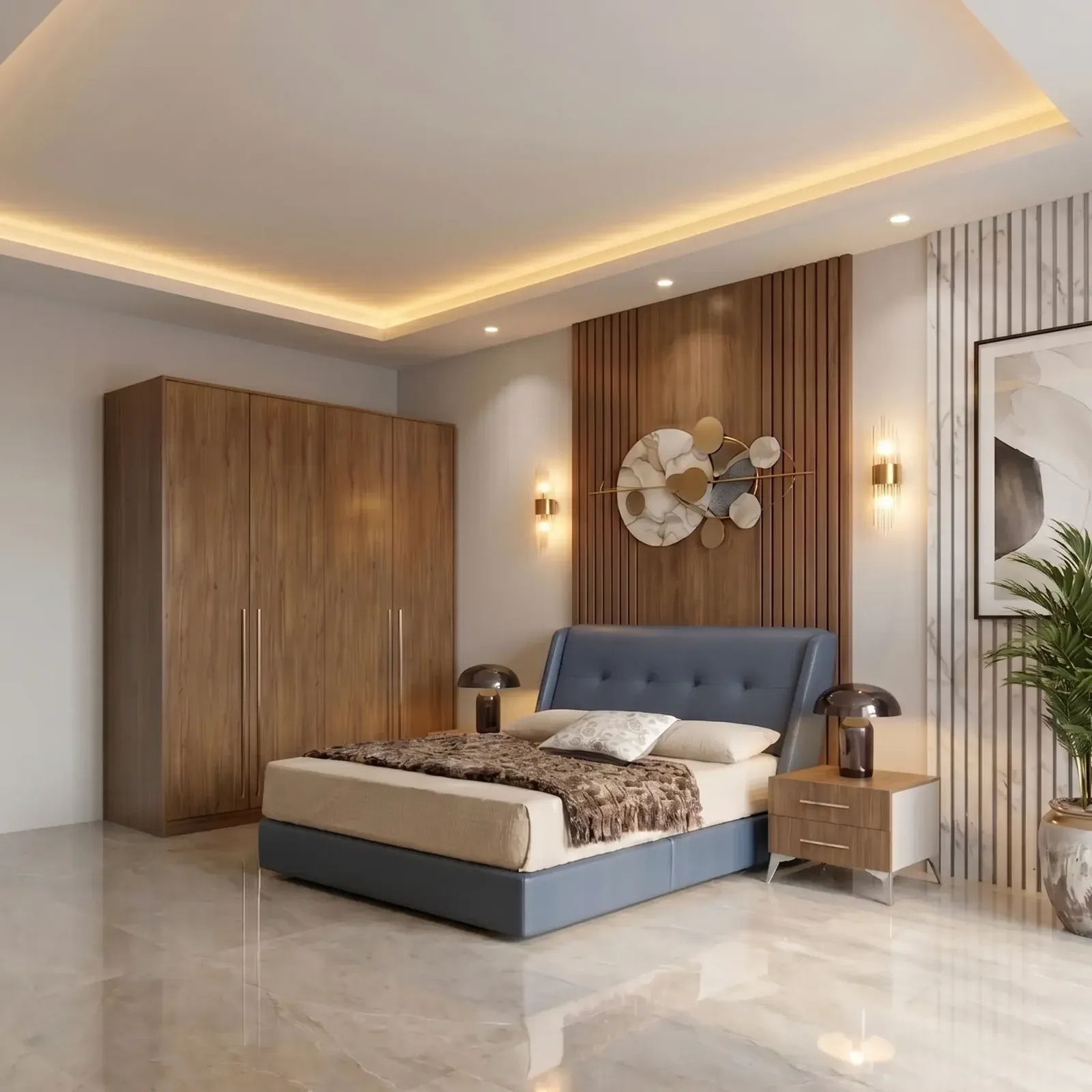
A built-in wardrobe is the single upgrade that transforms how a Malaysian bedroom feels and functions. Unlike a free-standing cabinet that leaves dead gaps at the sides and a dust trap on top, a fitted wardrobe is made to measure for your exact wall — floor to ceiling, corner to corner — so every centimetre earns its keep. This guide covers the decisions that actually matter for a built-in wardrobe in Malaysia: the best layouts for condo and landed rooms, sliding versus swing doors, how to organise the interior, and the materials and finishes that survive our year-round humidity.
Why a built-in wardrobe beats a free-standing one
Free-standing wardrobes are quick to buy, but they rarely fit a real room well. A built-in wardrobe is designed around your space, which pays off every single day in a Malaysian home where bedrooms are often compact and wall shapes are awkward.
- Uses every centimetre — it runs floor to ceiling and wall to wall, so there are no wasted gaps at the sides and no dead space above that only collects dust.
- Tames awkward corners — sloped ceilings, columns, beam bulkheads and window recesses can be built around, turning problem walls into storage.
- Custom fit for your clothes — you decide the split between hanging, shelving and drawers, instead of accepting a maker's fixed internal layout.
- A cleaner, calmer room — a flush, seamless run of doors reads as part of the architecture and makes even a small bedroom feel larger and more resolved.
The trade-off is that a built-in stays with the home rather than moving with you. If you own your property or plan to stay for years, that is exactly the point. Browse our wardrobe collection to see finishes, or read how our custom wardrobe service tailors each unit to your room.
Popular built-in wardrobe layouts for Malaysian rooms
The right layout depends on your floor plan and how much clothing you own. These are the configurations we build most often for Malaysian condos and landed homes.
- Reach-in (straight run) — a single wall of wardrobe, the default for most bedrooms. It is the simplest to plan and the easiest to fit sliding doors to, keeping the walkway clear.
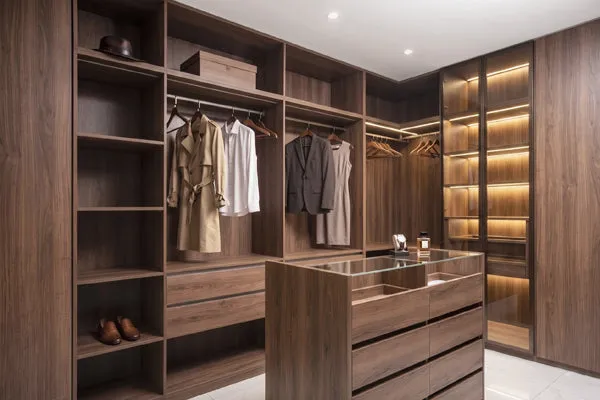
- Walk-in — a small dressing room lined with open or doored units on one, two or three walls. Ideal for a master bedroom or a converted small third room, and it keeps the sleeping area free of bulky cabinetry.
- L-shape corner — two runs meeting at a corner, which squeezes storage out of a wall that would otherwise be wasted. A corner carousel or angled hanging module keeps the inner corner usable.
- Over-bed bridging unit — floor-to-ceiling towers on both sides of the bed joined by an overhead bridge of cabinets. This reclaims the wall above the headboard and is a lifesaver in a tight condo bedroom.
Sliding vs swing doors: which wins?
Door type is the biggest decision after layout, because it dictates how much floor space the wardrobe needs and how you see your clothes. Both sliding door wardrobe and swing (hinged) door designs have a clear best use.
When sliding doors win
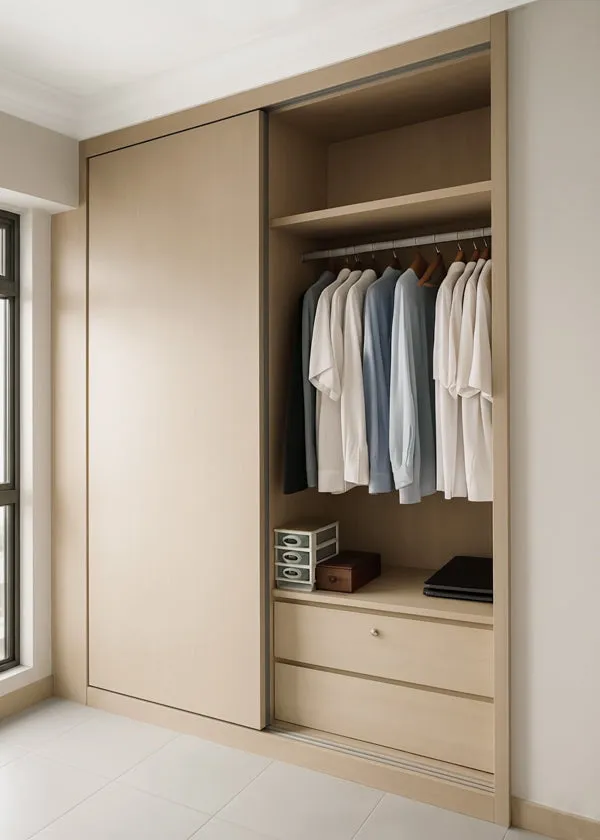
Sliding doors need zero clearance in front, so they are the go-to for tight bedrooms where a swinging door would hit the bed or block a walkway. They also suit long runs, look sleek and modern, and can carry full-length mirrors or glass panels. The trade-offs: you can only ever see half the wardrobe at once, and the bottom track needs occasional cleaning to run smoothly.
When swing (hinged) doors win
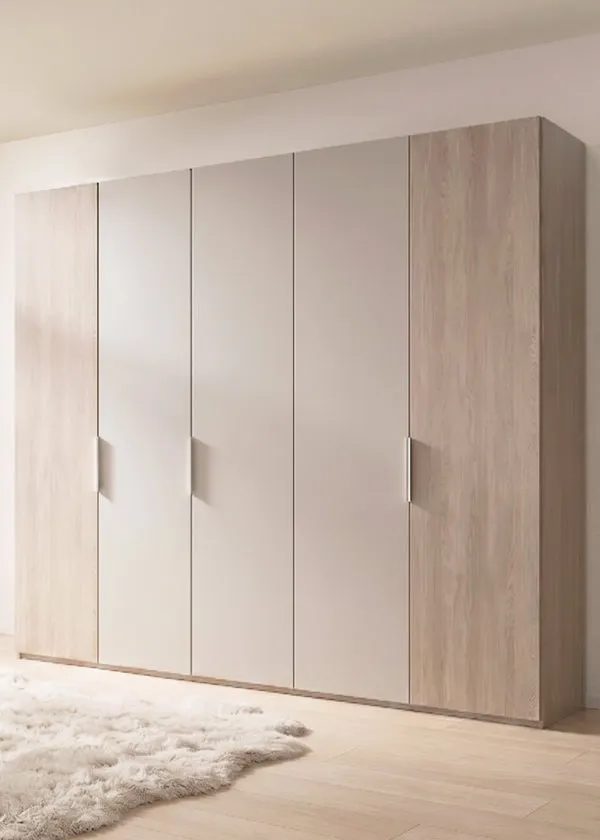
Hinged doors open fully, giving you a complete view of everything inside — easier for daily use and for fitting interior accessories flush to the front. They are usually more budget-friendly than sliding systems and seal a little better against dust. The catch is clearance: you need roughly 60 cm of clear floor in front for the doors to swing, so they suit rooms with space to spare. Bi-fold doors sit in between, needing less swing room than a full hinged door.
Organising the interior: zones that actually work
A wardrobe is only as good as its inside. Plan the interior around what you actually own — count your long garments, folded stacks and accessories before deciding the split. A well-zoned custom wardrobe holds far more than a same-size unit full of fixed shelves.
- Long-hang zone — full-height hanging for dresses, coats and the baju kurung, needing about 150 cm of clear drop below the rod.
- Double-hang zone — two stacked rods for shirts, blouses and folded trousers, which doubles hanging capacity in the same width.
- Adjustable shelves — for folded knits, bags and boxes; spacing them 30–40 cm apart keeps stacks reachable without toppling.
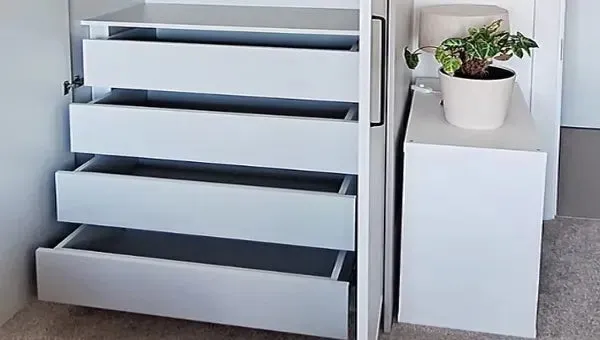
- Drawers — soft-close drawers keep smaller items and delicates tidy and dust-free, far better than an open shelf for everyday essentials.
- Pull-out trays and racks — pull-out trouser racks, tie and belt holders and a jewellery tray put accessories in view instead of tangled at the back.
- Finishing touches — a pull-down wardrobe lift reaches high shelves, LED strip lighting brightens deep interiors, and a built-in mirror saves buying a separate one.
Materials and finishes for Malaysia's humidity
This is where a built-in wardrobe lives or dies in our climate. Malaysia's constant humidity will swell and warp poor-quality board, so the carcass material and the edge sealing matter more than the door colour.
- Moisture-resistant board — ask for HMR (high-moisture-resistant) or V313-rated board for the carcass. Treated with moisture-resisting resin, it holds up far better than standard particleboard against our humid air.
- Laminate vs melamine finish — melamine-faced board is affordable, scratch-resistant and comes in hundreds of colours, ideal for interiors and most doors. A high-pressure laminate surface is tougher and more water-resistant for doors that take heavy daily use.
- PVC and aluminium options — a PVC-wrapped or aluminium-framed door resists moisture especially well and is easy to wipe down, a smart choice in very humid or poorly ventilated rooms.
- Edge banding is critical — the weakest point of any board is its edge. Insist on thick, well-sealed edge banding so humid air and stray moisture cannot creep into the seams and swell the panel.
In our climate, the carcass board and the edge sealing decide how long a wardrobe lasts — long after you have stopped noticing the door colour. — TD Furniture
Colour and finish trends
For a piece this large, a finish that flatters the room beats a bold statement that dates quickly. A few directions are dominating Malaysian bedrooms right now.
- Warm woodgrains — oak, walnut and ash-tone laminates bring a natural, calming feel and hide fingerprints well.
- Muted neutrals — off-white, greige, taupe and soft grey doors recede into the wall and make a small room feel airier.
- Matte over gloss — matte and textured finishes are quietly replacing high-gloss; they resist fingerprints and look more contemporary.
- Handleless and mirror fronts — J-groove handleless profiles read seamless, while a mirrored sliding panel adds function and bounces light around the room.
Measuring and sizing tips
Getting the dimensions right is what separates a wardrobe that feels effortless from one you fight with daily. A few practical rules before you commit.
- Depth — allow about 60 cm of internal depth so clothes hang square on the rod without the door pressing on the shoulders.
- Hanging heights — reserve roughly 150 cm of clear drop for long-hang, and split double-hang zones around the 100 cm mark for shirts and folded trousers.
- Height to the ceiling — run the wardrobe to the ceiling and put out-of-season items up top; it removes the dust-collecting gap and adds a whole shelf of storage.
- Door and walkway clearance — for swing doors, keep about 60 cm of clear floor in front; for a tight room, sliding doors remove this need entirely.
- Account for skirting and fittings — measure around skirting boards, plug points and light switches, and check the ceiling is level before finalising a floor-to-ceiling run.
Frequently asked questions
How much does a built-in wardrobe cost in Malaysia?
A built-in wardrobe is usually priced by the running foot, so the total depends on the width, the board grade, the door type and the interior accessories you add. Sliding doors and premium moisture-resistant board cost more than a basic hinged unit, but buying factory-direct removes the middleman markup. For an accurate figure, share your wall dimensions with us through our custom wardrobe service and we will quote to your exact design.
Which is better for a small bedroom, sliding or swing doors?
Sliding doors, in almost every case. They need no clearance to open, so they will not clash with the bed or block a narrow walkway — the two most common problems in a compact Malaysian condo room. Swing doors give a fuller view of the interior, so they are the better pick only when the room genuinely has 60 cm or more of free floor in front of the wardrobe.
What material is best for humidity in Malaysia?
Choose a moisture-resistant carcass — HMR or V313-rated board — with thick, well-sealed edge banding, and consider a PVC-wrapped or aluminium-framed door for rooms that are very humid or poorly ventilated. The finish colour is a matter of taste, but the board grade and edge sealing are what keep the wardrobe from swelling and warping over the years.
