Aluminium Kitchen Cabinet Malaysia: A Buyer's Guide
Are aluminium kitchen cabinets worth it in Malaysia? A factory-honest guide to pros, cons, costs and how aluminium compares to plywood and melamine.
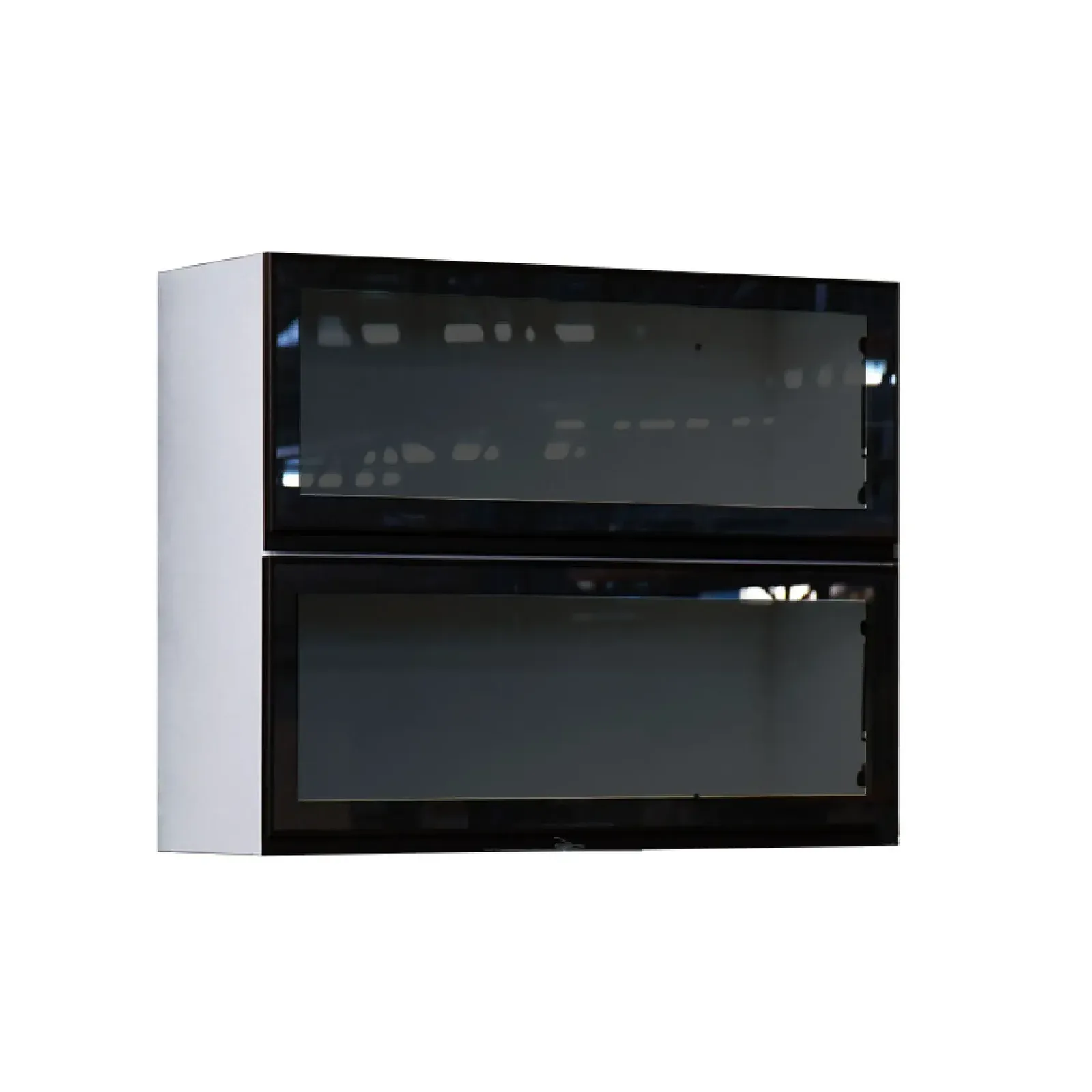
Walk into any new condo or landed home in Ipoh or Penang and you will spot them: sleek, matte black aluminium kitchen cabinets that never seem to swell, rot or attract termites. In Malaysia's hot, humid climate, the aluminium kitchen cabinet has gone from a niche commercial choice to a mainstream favourite — especially for the hard-working wet kitchen. But are they actually worth the higher price tag, and where does wood-based cabinetry still win? As a factory that builds kitchens in every material, here is our honest, no-sales-pitch breakdown.
Why aluminium kitchen cabinets are so popular in Malaysia
The case for aluminium comes down to one word: moisture. Our climate sits at high humidity almost year-round, and a busy Malaysian kitchen adds steam, splashes and the occasional leaky pipe under the sink. Wood-based boards absorb that moisture over time; aluminium simply does not. It is one of the few cabinet materials that genuinely shrugs off our weather.
- Waterproof & rot-proof — aluminium does not absorb water, so it will not swell, soften or rot, even if a pipe leaks under the sink. This is its single biggest advantage in a wet kitchen.
- Termite-proof — termites and other pests have nothing to eat. No wood fibre means no infestation, a real concern in many Malaysian homes.
- Non-flammable — aluminium will not catch fire or char near the stove the way wood-based panels can, adding a margin of safety in a heavy-cooking kitchen.
- Easy to clean — oil splatter and curry stains wipe straight off the smooth surface with a damp cloth; no sealing or special treatment needed.
- Dimensionally stable — it will not warp, crack or bow with humidity swings the way a poorly made wood-based door eventually can.
The honest trade-offs: where aluminium falls short
No material is perfect, and a factory that only listed the upsides would not be doing you any favours. Aluminium has real drawbacks you should weigh before committing your whole kitchen to it.
- It dents. Aluminium is soft compared to steel. A dropped pot or a hard knock can leave a permanent dent that, unlike a wood scratch, cannot simply be sanded or touched up.
- The look is more industrial. Even with wood-grain printed finishes, aluminium reads cooler and more clinical than real timber or laminate. If you want a warm, cosy or classic kitchen, it can feel hard.
- It can be noisier. Without good soft-close hardware, aluminium doors and drawers shut with a metallic clang and can rattle over time.
- Thermal expansion. Metal expands and contracts more with temperature than wood, so cheaper joinery can loosen or develop small gaps if it is not engineered for it.
- Quality varies enormously. A thin-gauge aluminium cabinet with flimsy hinges is a false economy — more on what actually separates good from bad below.
Aluminium vs plywood, melamine and solid wood
"Which kitchen cabinet material is best?" is the wrong question — the right one is "best for which zone and budget?" Here is a fair comparison of the options Malaysian homeowners actually choose between.
Aluminium vs plywood
Plywood is the quality benchmark for wood-based carcasses. Its cross-laminated layers resist swelling far better than particleboard, and paired with a PVC or PUR-finished door it gives a warm, premium look with huge design flexibility. The aluminium vs plywood kitchen cabinet debate usually comes down to this: aluminium is the more bulletproof choice for water and pests, while good plywood offers warmth, easier dent repair and a more natural feel — at a generally lower upfront cost than aluminium. Lower-grade plywood in a poorly ventilated kitchen, however, can still soften and warp over the years.
Melamine, MDF and particleboard
A melamine kitchen cabinet is a board core (particleboard or MDF) wrapped in a tough, wipe-clean melamine surface. It is the most cost-effective route and comes in dozens of colours and wood-grains — but the core is everything. Standard particleboard acts like a sponge if water reaches an exposed edge, so for Malaysian kitchens you want at least an E0-grade, moisture-resistant board with properly sealed edge banding (we use E0 melamine with PUR edging as standard). Plain MDF or untreated melamine near a sink is asking for trouble; reserve it for dry, low-splash zones.
Solid wood and stainless steel
Solid timber is beautiful and repairable but the most expensive and the most reactive to humidity — it needs the most care and is rarely the practical pick for a heavy Malaysian wet kitchen. At the other extreme, a stainless steel kitchen cabinet is even more waterproof and heat-proof than aluminium and is the standard in commercial kitchens, but it costs more, dents and scratches show easily, and the look is firmly industrial. For most homes, aluminium sits in the sweet spot between the two.
There is rarely one "best" material for a whole kitchen. The smartest builds we make are hybrids — matching the right material to each zone instead of forcing one everywhere. — TD Furniture
Dry kitchen vs wet kitchen: match the material to the zone
The split between a dry kitchen and wet kitchen cabinet setup is a very Malaysian distinction, and it is the key to spending wisely. The wet kitchen is where the real cooking happens — heavy frying, boiling, washing — so it takes the moisture, heat and grease. The dry kitchen is the show kitchen: an island, a coffee corner, light prep, and the part guests actually see.
- Wet kitchen — favour aluminium or stainless steel near the sink and stove, or at minimum a 100% waterproof carcass (such as aluminium or PVC foam board) for the sink base where leaks start. Durability beats looks here.
- Dry kitchen — this is where warmer plywood or laminate finishes earn their place, giving you the cosy, designed look without exposing them to constant water.
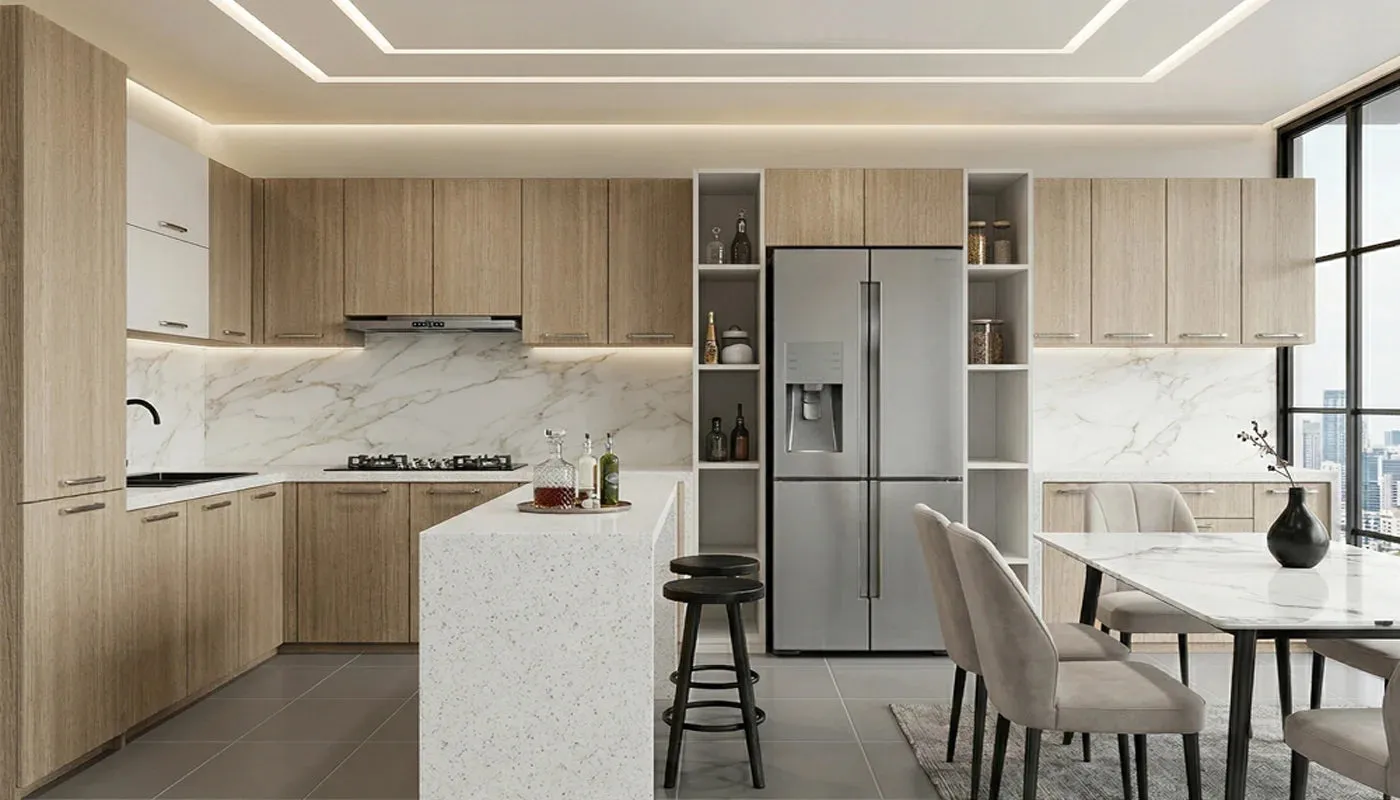
- The hybrid — many of our kitchens pair an aluminium or moisture-resistant wet zone with a wood-grain dry zone, so each area gets the material it deserves and the budget goes where it matters.
What actually determines quality and price
Two aluminium kitchens can quote at wildly different prices, and it is almost never about the headline word "aluminium." The real cost — and the real lifespan — hides in the details. When you compare quotes, look past the material label to these four things.
- Aluminium gauge (thickness). Profiles commonly come in 0.8mm, 1.0mm and 1.2mm. For most homes, 1.0mm is the practical residential standard — strong and rigid without overpaying. The thinner 0.8mm feels flimsier and dents more easily; 1.2mm is heavy-duty. A suspiciously cheap quote often means thin-gauge profiles.
- Door panel type. The door is what you see and touch most. Aluminium-framed doors with glass, acrylic, or a quality board insert all behave and age differently — and the finish (powder-coated, anodised) affects how it wears.
- Hardware. Branded soft-close hinges and drawer runners (we fit Blum as standard) are the difference between a kitchen that glides silently for years and one that rattles and sags within months. This is where cheap kitchens cut corners.
- Installation. Even great materials fail if the carcass is not level, sealed and properly fixed. In-house installation by the maker — not an outsourced sub-contractor — protects the quality you paid for.
How to choose: a quick checklist
- Map your zones first — decide what is wet kitchen and what is dry kitchen before picking any material.
- Default to aluminium or stainless for the heavy wet zone; consider warmer plywood or laminate for the dry show kitchen.
- For any wood-based board, insist on an E0-grade, moisture-resistant core with sealed edges — never plain particleboard near water.
- Confirm the aluminium gauge in writing (aim for 1.0mm for most homes) and ask which hinge and runner brand is fitted.
- Compare quotes on like-for-like specs, not just the lowest number — and check whether installation is in-house.
- See and touch the materials in person before you commit; a finish that looks great in a photo can feel very different up close.
Frequently asked questions
Are aluminium kitchen cabinets worth it in Malaysia?
For the wet kitchen, usually yes. The waterproof, termite-proof and non-flammable nature of aluminium is a genuine fit for our climate and high-heat cooking, and it pays back the higher upfront cost in longevity and near-zero maintenance. For a dry show kitchen where you want warmth and where moisture is low, a quality wood-based build can be the better value — which is exactly why a hybrid kitchen so often wins.
Do aluminium cabinets dent easily?
They can — aluminium is softer than steel, so a hard impact from a dropped pot can leave a dent. A thicker gauge (1.0mm or 1.2mm) resists this far better than thin 0.8mm profiles, which is one more reason not to chase the cheapest quote. Unlike a scratch in wood, a dent in aluminium generally cannot be repaired invisibly, so the panel may need replacing.
Is aluminium more expensive than a plywood or melamine kitchen?
Generally aluminium costs more upfront than a melamine or plywood build of the same size. But the comparison should include lifespan and upkeep: aluminium rarely needs repairs in a wet environment, while a cheaper wood-based kitchen exposed to constant moisture may need attention sooner. The most cost-effective answer for many homes is not all-or-nothing but a custom mix of materials by zone.
